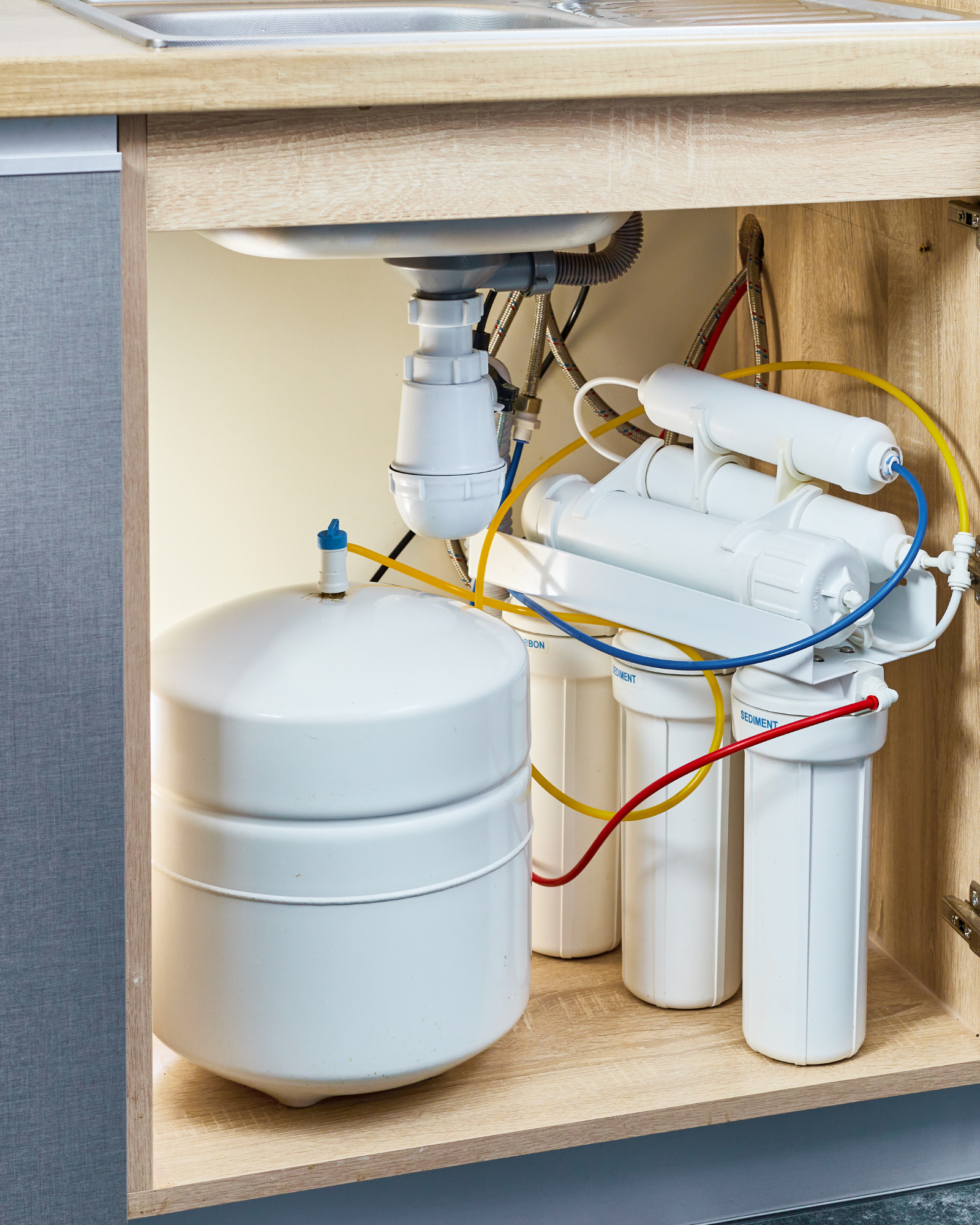
La ósmosis inversa (OI) es una de las tecnologías de purificación de agua más potentes del mundo, pero tiene una desventaja bien conocida: elimina todos los minerales. Calcio, magnesio, potasio... desaparecen.
Esta guía explica exactamente por qué la ósmosis inversa elimina minerales, cómo funciona la tecnología y por qué muchos europeos ahora prefieren sistemas de filtración que retienen minerales.
¿Qué hace realmente la ósmosis inversa?
La ósmosis inversa impulsa el agua a través de una membrana semipermeable con un tamaño de poro extremadamente pequeño, de aproximadamente 0,0001 micras. Esta membrana bloquea prácticamente todo, excepto las moléculas de H₂O puro.
Según la Organización Mundial de la Salud (OMS) , la ósmosis inversa elimina:
- minerales disueltos (calcio, magnesio, potasio)
- sales
- rieles
- compuestos orgánicos
- PFAS y muchos contaminantes
Esto es útil en entornos industriales o de desalinización, pero también significa que la ósmosis inversa elimina la composición mineral natural del agua.
Por qué la ósmosis inversa elimina minerales: explicación técnica
Los minerales en el agua no flotan como "partículas", sino que existen como iones disueltos (Ca²⁺, Mg²⁺, K⁺, etc.). Estos iones son extremadamente pequeños, pero aún demasiado grandes para atravesar una membrana de ósmosis inversa.
Piénsalo como un tamiz molecular: solo cabe el agua pura. Todo lo demás queda atrás.
Por eso la ósmosis inversa elimina:
- buenos minerales
- contaminantes malos
- Básicamente todo excepto H2O
El resultado es agua “desmineralizada” o “con bajo contenido de TDS”.
Lo que dice la OMS sobre el agua desmineralizada
La OMS ha publicado numerosos documentos en los que se analizan los posibles efectos secundarios del agua con un contenido muy bajo de minerales, especialmente cuando se consume a largo plazo.
Del informe de la OMS sobre nutrientes en el agua potable :
- Los minerales en el agua son “altamente biodisponibles”
- El agua baja en minerales puede tener “mal sabor y baja aceptación por parte del consumidor”
- El calcio y el magnesio son beneficiosos para el equilibrio electrolítico.
La OMS también señala que consumir agua con poco o ningún mineral no es ideal para una hidratación eficiente .
Por qué los minerales del agua son importantes para el cuerpo
El agua del grifo europeo contiene naturalmente calcio y magnesio, electrolitos importantes.
Estudios revisados por pares muestran:
- El magnesio del agua se absorbe extremadamente bien ( Sabatier et al., 2002 )
- El calcio en agua dura es altamente biodisponible ( Brink et al., 2008 )
- Los minerales presentes en el agua favorecen el equilibrio electrolítico natural ( OMS )
Es por esto que muchos europeos prefieren agua que conserve su perfil mineral natural.
Por qué la gente elige la ósmosis inversa (y por qué muchos la abandonan)
Se elige RO para:
- eliminación muy alta de contaminantes
- desalinización (zonas costeras)
- usos médicos específicos
La gente cambia porque:
- El agua tiene un sabor plano sin minerales.
- Puede sentirse menos hidratante.
- La ósmosis inversa desperdicia agua durante la filtración
- Los sistemas son más grandes y complejos
- La eliminación de minerales requiere cartuchos de remineralización.
En muchos casos, la filtración con carbón compatible con minerales es una solución cotidiana más sencilla, especialmente en Europa.
RO vs Carbón activado (filtración respetuosa con los minerales)
Ósmosis inversa:
- elimina minerales
- elimina las sales
- elimina PFAS
- elimina todo excepto agua pura
Sistemas de carbón activado:
- eliminar PFAS ( EPA )
- eliminar cloro, COV, microplásticos ( Investigación ACS ES&T )
- mantener los minerales intactos
- mejorar el sabor
- No requiere electricidad ni aguas residuales
Para la mayoría de los hogares, este es el punto ideal: agua limpia + minerales naturales.
La alternativa amigable con los minerales (PJURE)
El sistema debajo del fregadero de acero inoxidable de PJURE utiliza:
- Carbón activado de coco
- KDF (cobre + zinc)
- Membrana de sedimentos de PP
Elimina contaminantes, no minerales.
Explora cómo funciona el sistema:
Filtro de acero inoxidable para debajo del fregadero PJURE
Conclusión: La ósmosis inversa elimina minerales porque elimina casi todo
La ósmosis inversa no es "mala", simplemente es una purificación extremadamente agresiva. Por eso elimina los minerales: la membrana está diseñada para bloquear casi todas las sustancias disueltas.
Para el uso diario, muchos europeos eligen sistemas de retención de minerales porque:
- mantener electrolitos naturales
- sabe mejor
- hidratarse mejor
- requieren menos mantenimiento
- son más sostenibles
Si desea agua limpia sin perder minerales, un sistema basado en carbono es la opción adecuada.
Descubra PJURE → mypjure.com/products/under-sink-water-filter