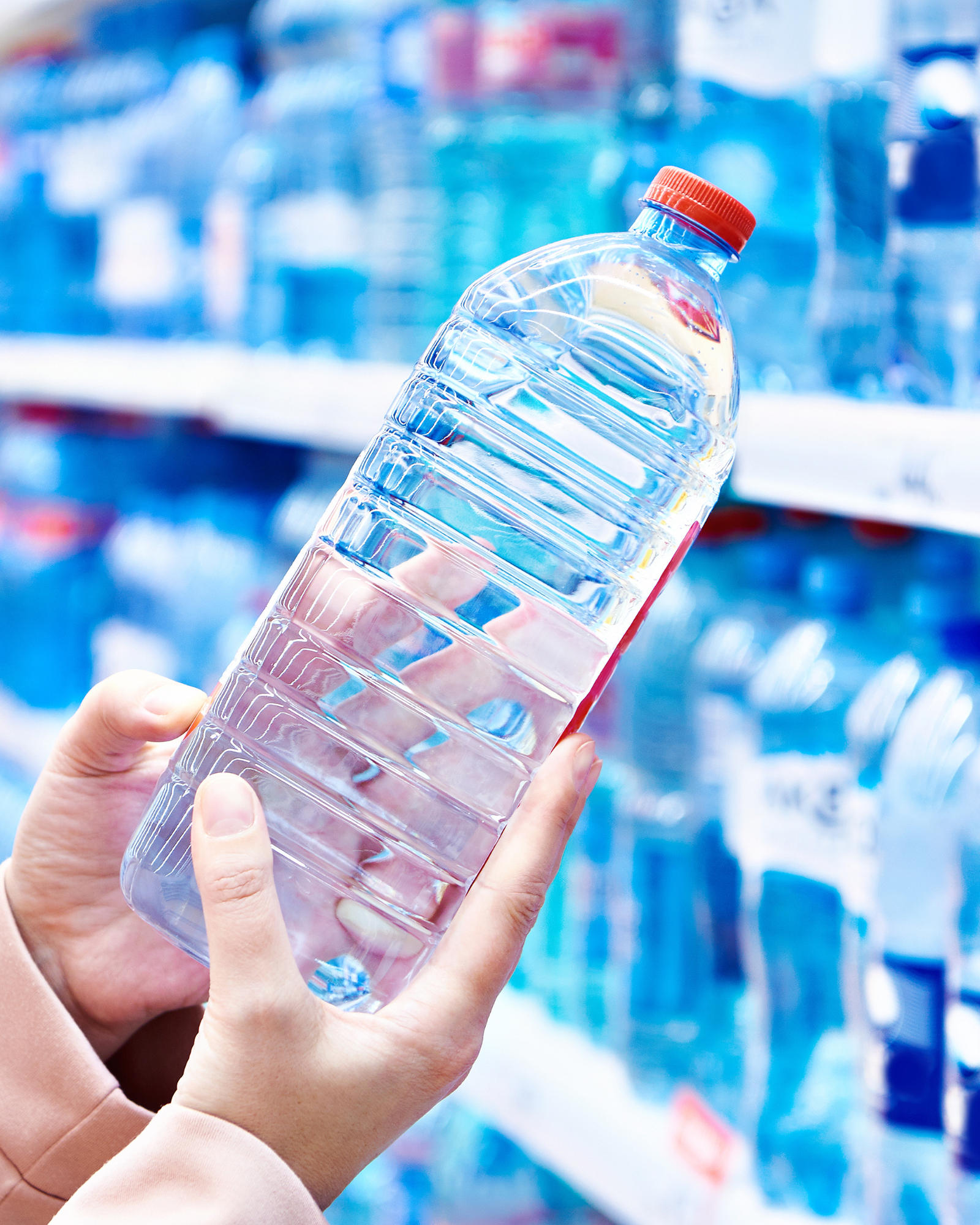
Muchos hogares europeos todavía dependen del agua embotellada para beber. Se siente conveniente. Se siente seguro.
Pero el agua embotellada es una de las formas más caras de mantenerse hidratado.
Al comparar agua embotellada vs agua del grifo en Europa, especialmente el agua del grifo filtrada, la diferencia de costo se vuelve sorprendentemente grande.
Desglosaremos los números reales.
El costo del agua embotellada en Europa
El precio promedio del agua embotellada en Europa suele oscilar entre 0,30 € y 1,50 € por litro, dependiendo de la marca y el minorista.
Incluso las marcas de supermercados económicos a menudo cuestan alrededor de 0,30 € a 0,50 € por litro.
Para alguien que bebe dos litros al día, el costo aumenta rápidamente.
- Aproximadamente 0,60 € a 3 € al día
- 219 € a 1.095 € al año
- 1.095 € a 5.475 € en cinco años
Y eso es para una persona.
Una familia de cuatro puede gastar fácilmente varios miles de euros en agua embotellada durante el mismo período.
El costo del agua del grifo filtrada
El agua del grifo en Europa ya está altamente regulada. La Directiva de Agua Potable de la Comisión Europea establece estándares estrictos para la calidad del agua potable pública.
Sin embargo, muchos hogares todavía filtran el agua del grifo para reducir el cloro, los metales pesados, los PFAS o los microplásticos.
Con un sistema de filtración debajo del fregadero, el costo principal es el filtro de reemplazo.
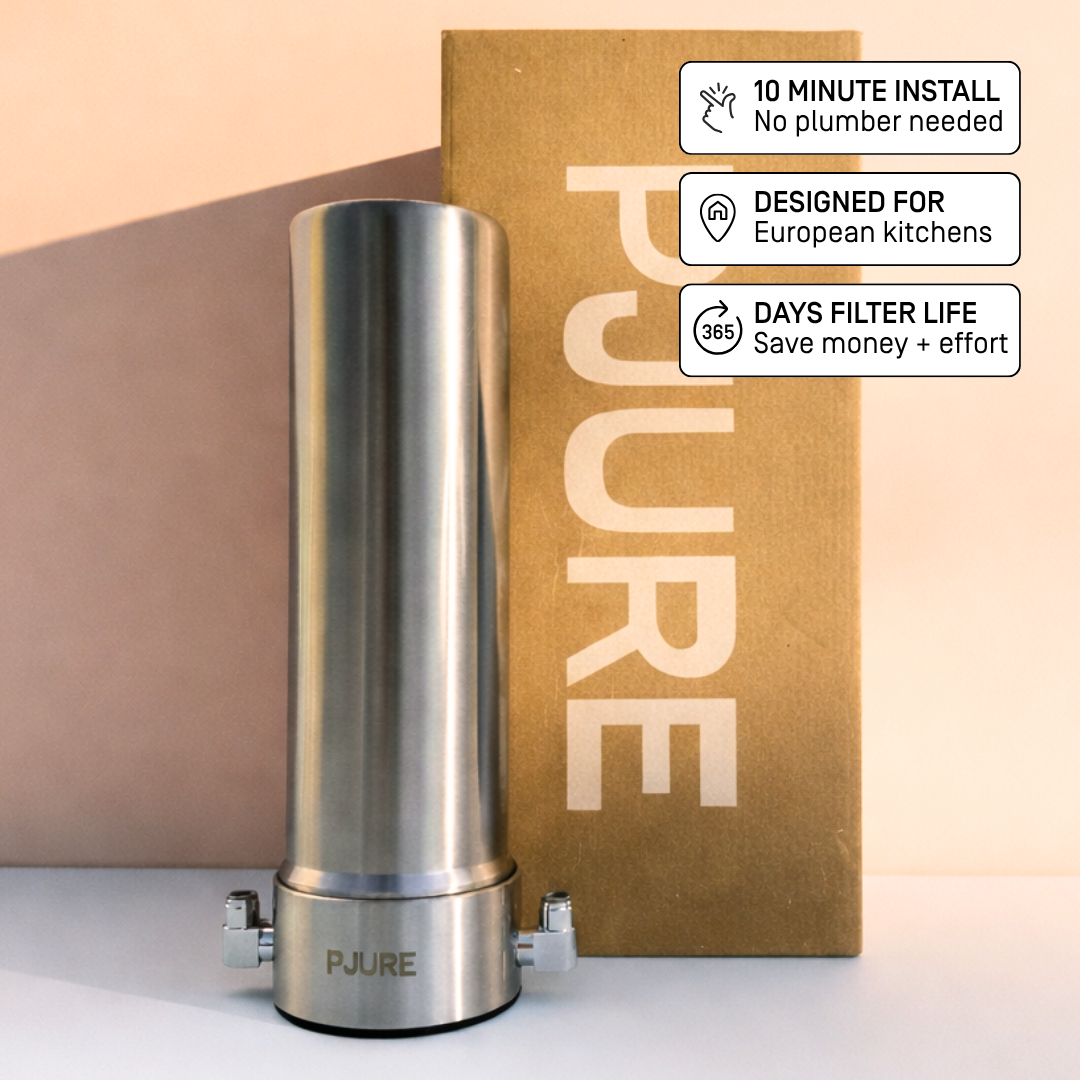
Por ejemplo, el filtro de agua de acero inoxidable debajo del fregadero PJURE cuesta 99 € por el sistema y 39 € al año por un filtro de reemplazo.
Durante cinco años, el costo total es el siguiente.
- Sistema inicial: 99 €
- Filtros de reemplazo: 39 € al año
- Cuatro años de recambios: 156 €
- Costo total en cinco años: 255 €
Eso te da agua potable filtrada ilimitada directamente del grifo.
Agua embotellada vs. agua del grifo filtrada. Una comparación de 5 años
| Fuente de agua | Costo estimado en 5 años |
|---|---|
| Agua embotellada (1 persona) | 1.095 € – 5.475 € |
| Agua embotellada (familia de cuatro) | 4.000 € – 20.000 €+ |
| Filtro debajo del fregadero PJURE | 255 € en total |
La diferencia se hace evidente muy rápidamente.
Filtrar el agua del grifo en casa puede costar hasta diez veces menos que comprar agua embotellada.
Costos ocultos del agua embotellada
El precio que pagas en la tienda es solo una parte de la historia.
El agua embotellada también genera otros costos.
- Residuos plásticos
- Emisiones de transporte
- Espacio de almacenamiento en casa
- Viajes frecuentes a la tienda
La Agencia Europea de Medio Ambiente ha destacado el impacto ambiental de los envases de plástico en toda Europa.
Filtrar el agua del grifo reduce significativamente esta huella.
Microplásticos en el agua embotellada
El costo no es la única preocupación con el agua embotellada.
Investigaciones recientes han descubierto que el agua embotellada también puede exponer a los consumidores a microplásticos y nanoplásticos.
Un estudio publicado en Proceedings of the National Academy of Sciences encontró que un solo litro de agua embotellada puede contener cientos de miles de partículas plásticas microscópicas.
Muchas de estas partículas son tan pequeñas que son invisibles a simple vista.
Según un informe de The Independent, los investigadores estiman que el agua embotellada puede contener muchas más partículas de plástico de lo que se creía anteriormente.
Los científicos aún están estudiando los efectos a largo plazo de la ingestión de microplásticos en la salud. Pero las preocupaciones incluyen la inflamación, el estrés oxidativo y la posible alteración de los sistemas biológicos.
Reducir la exposición al plástico es una de las razones por las que muchos hogares están cambiando del agua embotellada al agua del grifo filtrada.
La conveniencia también importa
El agua embotellada puede parecer conveniente en la tienda.
Pero en casa significa cargar paquetes pesados, almacenar botellas y reabastecerse constantemente.
Un filtro debajo del fregadero proporciona agua potable limpia ilimitada directamente del grifo.
Sin levantar. Sin almacenamiento. Sin plástico.
Una opción más inteligente a largo plazo
Al comparar agua embotellada vs agua del grifo en Europa, la filtración ofrece una clara ventaja.
Es más barato. Más conveniente. Y significativamente mejor para el medio ambiente.
Si quieres ver cómo funciona la filtración debajo del fregadero, explora el filtro de agua de acero inoxidable debajo del fregadero PJURE.
También puedes obtener más información sobre la instalación y las capas de filtración en las Preguntas Frecuentes de PJURE.
Mejor agua no debería costar más.
Debería costar menos.