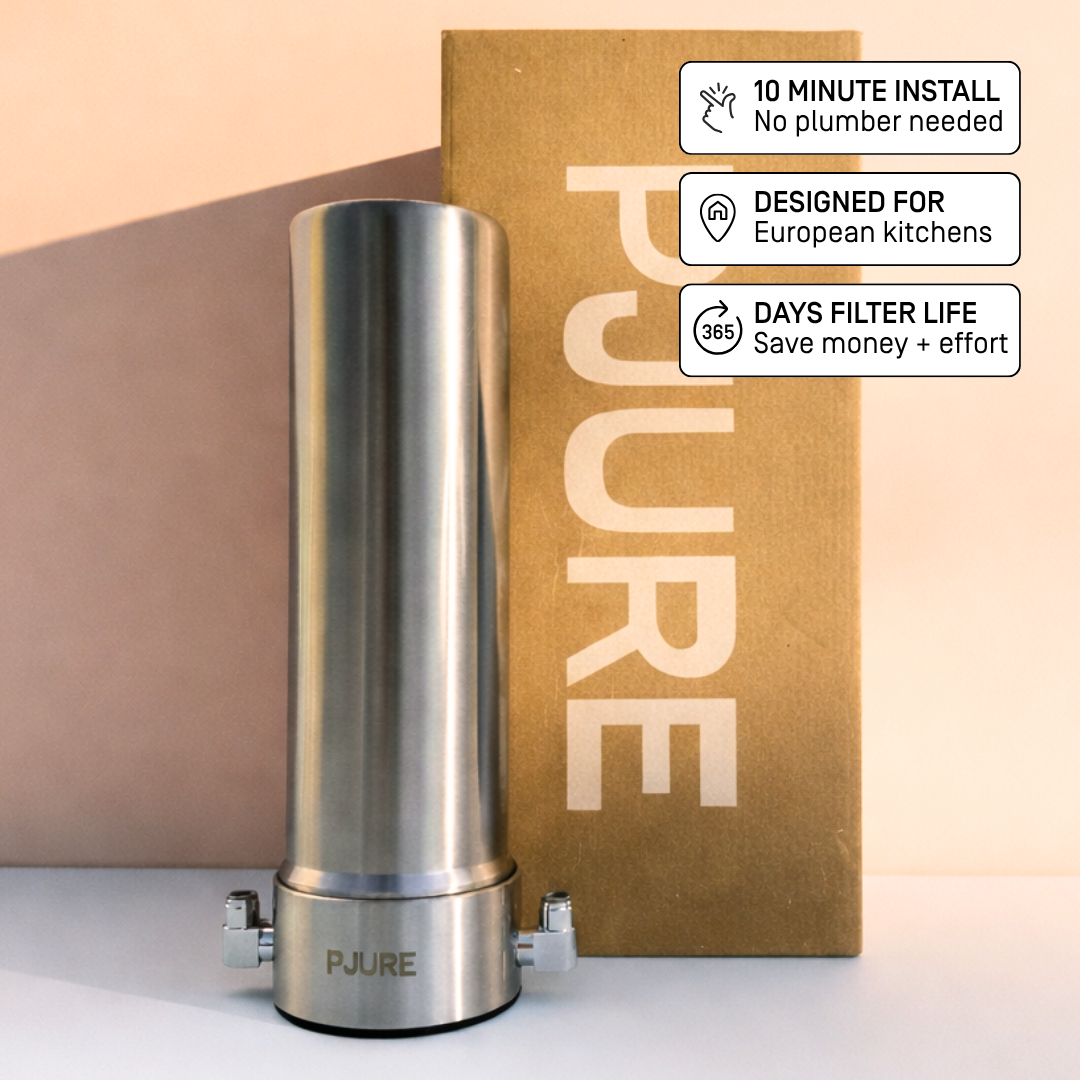
Most under-sink filters today come in plastic housings. Lightweight, yes. Durable? Not always. That’s why stainless steel filtration systems are becoming the new standard in Europe — especially in homes that want performance, hygiene and longevity.
This guide breaks down why stainless steel matters, what makes it different from traditional plastic systems, and why it’s one of the strongest upgrades you can make to your water quality.
1. Stainless Steel = No Microplastics
Plastic filter housings can degrade over time, especially with pressure changes, heat, or repeated mechanical stress. In Europe, microplastics have been detected in drinking water systems according to the European Environment Agency (EEA, 2023).
A stainless steel housing avoids this completely:
- no plastic leaching
- no microplastic shedding
- fully inert interior
You filter out contaminants — without adding new ones.
2. Better Hygiene in Warm European Climates
Plastic is porous on a microscopic level and can retain biofilm over time. Stainless steel is non-porous, naturally hygienic and widely used in food, medical and beverage industries.
Supported by the WHO Drinking Water Quality Guidelines, stainless materials are preferred where long-term water contact occurs.
- easier to keep clean
- resistant to bacterial growth
- no chemical migration
Perfect for warm, humid EU regions like Spain, Portugal, Italy and Southern France.
3. Stronger Pressure Resistance
European plumbing systems vary — and older buildings often experience pressure spikes. Stainless steel tolerates far higher pressure than plastic, reducing risk of cracks or rupture.
Plastic housings can fatigue over time. Stainless steel maintains structural strength for decades.
Result: A safer, more reliable filter system.
4. Zero Impact on Mineral Balance
Stainless steel doesn’t alter the mineral composition of water. It simply protects the filtration media inside.
This matters because minerals in water (calcium + magnesium) contribute to hydration, taste and electrolyte balance.
Supported by WHO research showing that minerals in drinking water are “highly bioavailable and beneficial.” Source: WHO – Nutrients in Drinking Water.
5. Designed for Long-Term Filtration Performance
Stainless steel protects the internal filter elements from:
- UV exposure
- temperature shifts
- mechanical stress
- impact damage
This means:
- the carbon media stays dry and stable
- KDF (copper + zinc) maintains redox efficiency
- PP membrane avoids compression
Better protection = better filtration consistency.
6. Sustainable Construction (No Disposable Housing)
Plastic systems typically need full housing replacement when seals wear out. Stainless steel systems are built to last indefinitely.
Environmental benefits:
- 1 filter cartridge per year (not the full housing)
- significantly reduced plastic waste
- long product lifespan
For EU consumers trying to reduce waste, stainless steel is a clear upgrade.
7. Modern Design That Fits European Kitchens
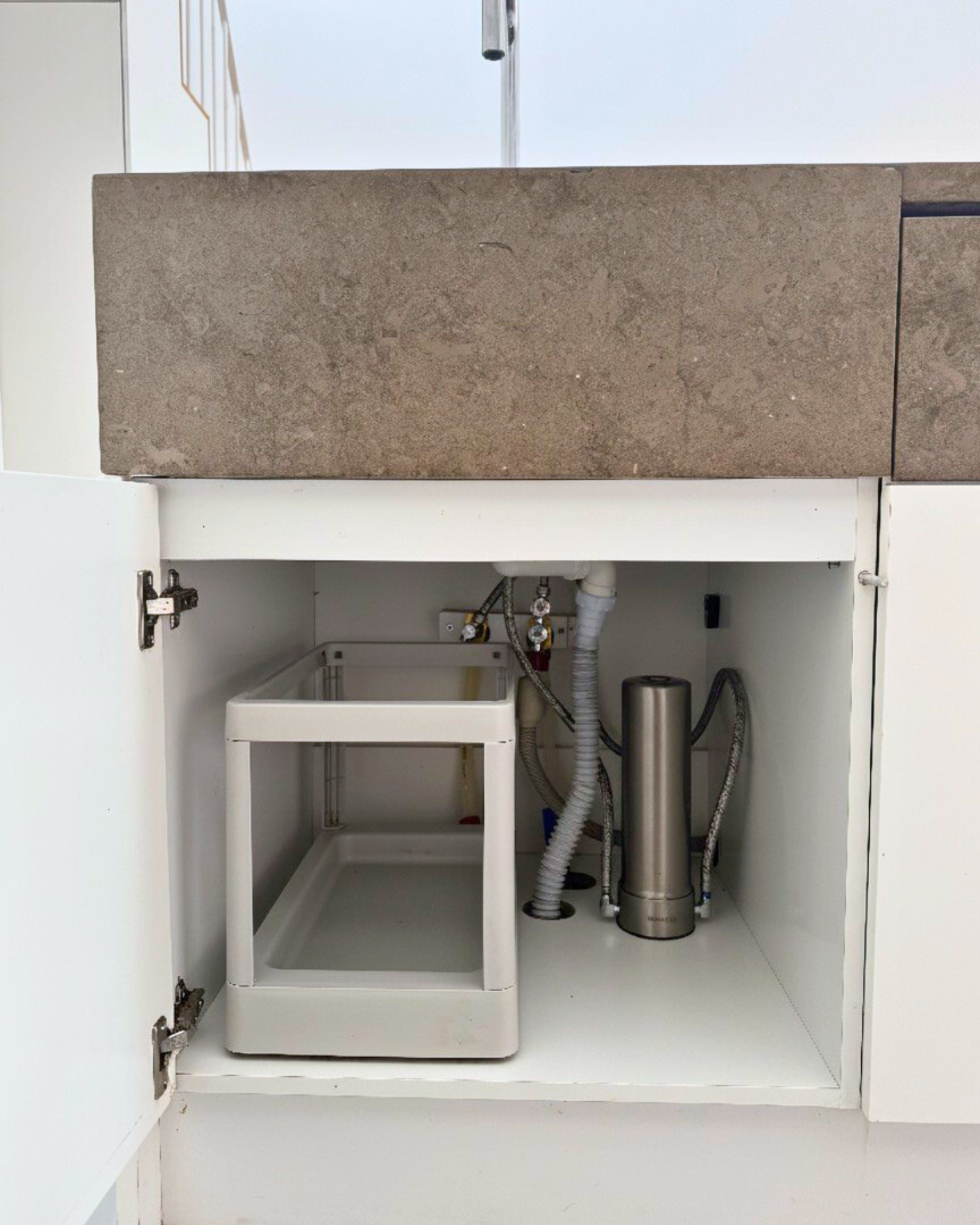
Minimalist. Clean. Industrial-grade. Stainless steel blends into Nordic, Japandi, modern and premium European kitchen designs.
No bulky white plastic under the sink. Just a clean, timeless cylinder you never have to think about.
8. Perfect Pairing: Stainless Steel + Activated Carbon Filtration
A stainless steel housing is not the filtration — it’s the protection. What matters inside:
- Coconut activated carbon → PFAS, chlorine, VOCs, microplastics
- KDF (copper + zinc) → chlorine + metals via redox reactions
- PP membrane → sediment + pipe particles
The housing keeps the media stable, dry and efficient — which improves performance over time.
Supported by EPA and ECHA documentation around activated carbon efficiency for PFAS and organic contaminants:
PJURE’s Stainless Steel Under-Sink Filter (10-Second Overview)
- Stainless steel housing
- Coconut activated carbon (high-density)
- KDF (copper + zinc)
- PP membrane
- Mineral-friendly filtration
- No electricity
- No wastewater
- 20–30 min installation
See full system details:
PJURE Stainless Steel Under Sink Water Filter
Conclusion: Why Stainless Steel Wins
If you want safe, long-lasting, hygienic filtration with mineral-friendly water — stainless steel simply performs better than plastic.
The benefits are clear:
- no microplastics
- better hygiene
- higher durability
- protects filtration media
- cleaner taste
- environmentally smarter
Upgrade once. Enjoy it every day.
Discover PJURE Stainless Steel → mypjure.com/products/under-sink-water-filter