

PJURE vs Brita: Jug Filter or Under-Sink Filter? (2026 Guide)
Partagez cet article
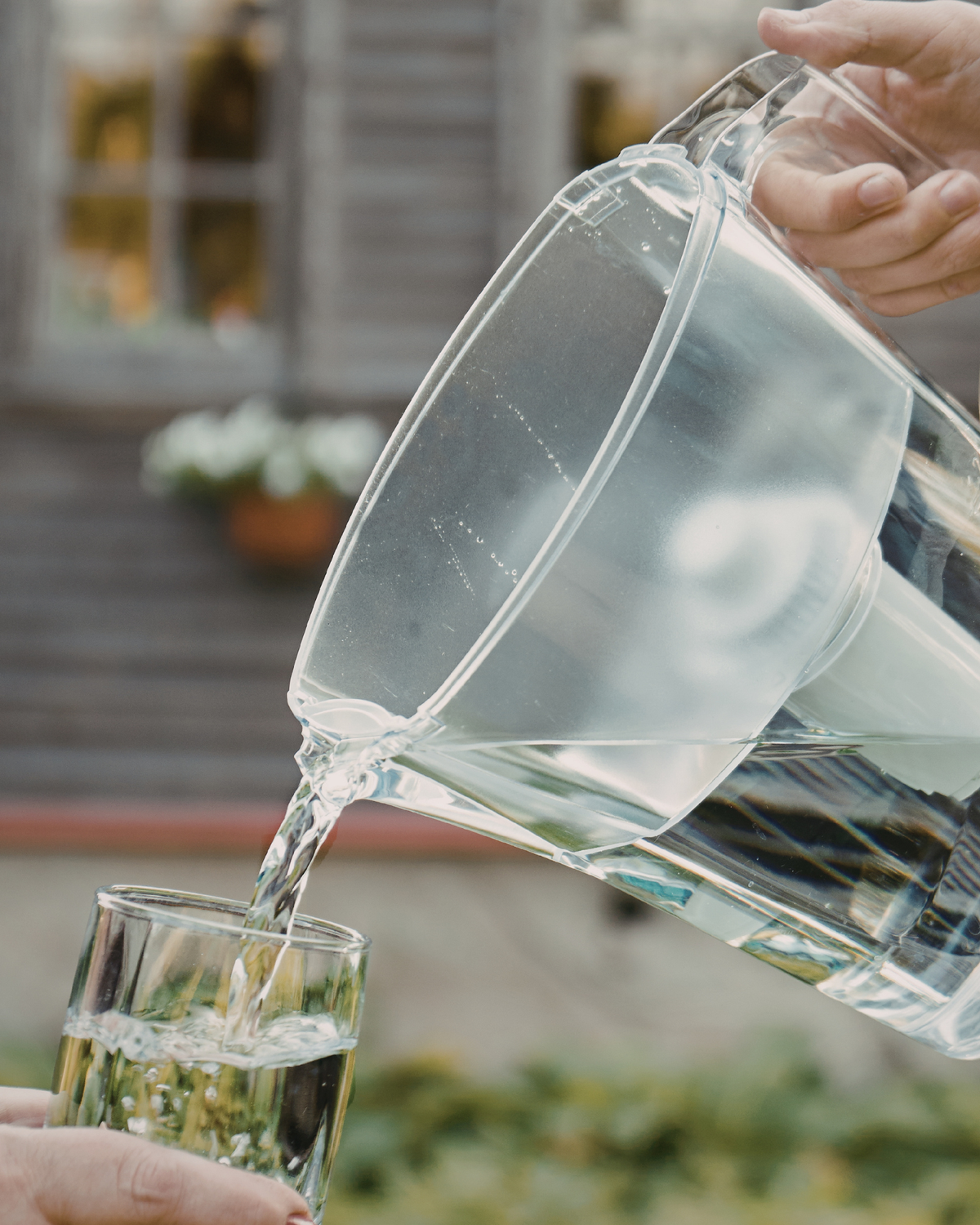

A jug filter is the cheap, simple way to start; an under-sink filter is the way to stop thinking about it. Both reduce chlorine taste. The differences are in volume, minerals, how often you change cartridges, and what it costs over a year.
Quick answers
- Jug filters (like Brita’s Maxtra range): carbon plus ion-exchange resin, filled by hand, cartridge changed about every month.
- Under-sink filters (like PJURE): filtered water straight from your tap, one cartridge a year.
- Minerals: ion-exchange jugs lower calcium and magnesium; carbon-only under-sink filters keep them.
- Brita’s own under-sink system uses a separate tap; PJURE connects to the tap you already have.
Side by side
| Jug filter | PJURE under-sink filter | |
|---|---|---|
| How you get water | Fill, wait, pour | Straight from your normal tap |
| Volume | About 1–1.5 L at a time | As much as you need, for drinking and cooking |
| Media | Carbon granules + ion-exchange resin | Pre-filter, KDF® 55, coconut-shell carbon block, membrane, mineral stage |
| Minerals | Partly removed by the resin | Kept |
| Cartridge changes | Roughly every 4 weeks | Once a year (30,000 litres) |
| Tested claim | See the maker’s own data | NSF/ANSI 42: at least 97% chlorine reduction through 30,000 L |
| Installation | None | About 10 minutes, no plumber |
| Space | Fridge and worktop | Under the sink |
Cost over a year
A jug is cheaper to start with. Over time, monthly cartridges add up, and families often end up filling the jug several times a day. An under-sink filter costs more up front, then one cartridge a year: PJURE’s replacement is €49, or €39 on subscription. For a full cost comparison including bottled water, see is bottled water worth it?
Which suits you?
- Choose a jug if you live alone, drink little filtered water, or can’t touch the plumbing at all.
- Choose an under-sink filter if you want filtered water for coffee, cooking and drinking without refilling, and want to keep the minerals.
- Hygiene note: any filter that holds water should be used and changed as instructed. Stiftung Warentest found germs in every jug filter it tested after a simulated holiday absence (test.de, 2022), so keep the jug in the fridge and change cartridges on time.
More on choosing: how to choose an under-sink filter, filters that use your existing tap and which filters keep the minerals.
PJURE
The PJURE under-sink water filter connects to your existing cold-water tap in about 10 minutes, keeps the calcium and magnesium, and is independently tested to NSF/ANSI 42: at least 97% chlorine reduction through the full 30,000 litres. Free EU shipping and a 100-day trial.
Frequently asked questions
Is an under-sink filter better than a Brita jug?
It’s more convenient and keeps minerals; a jug is cheaper to start. Which is better depends on how much filtered water you use.
Do jug filters remove minerals?
Jugs with ion-exchange resin lower calcium and magnesium. Carbon-only filters keep them.
Does Brita make an under-sink filter?
Yes, but it uses its own separate tap. PJURE works with the tap you already have.
By Annette Holst, founder of PJURE · Updated 22 November 2026
