

Stainless Steel vs Plastic Under-Sink Water Filters (2026 Guide)
Condividi questo articolo
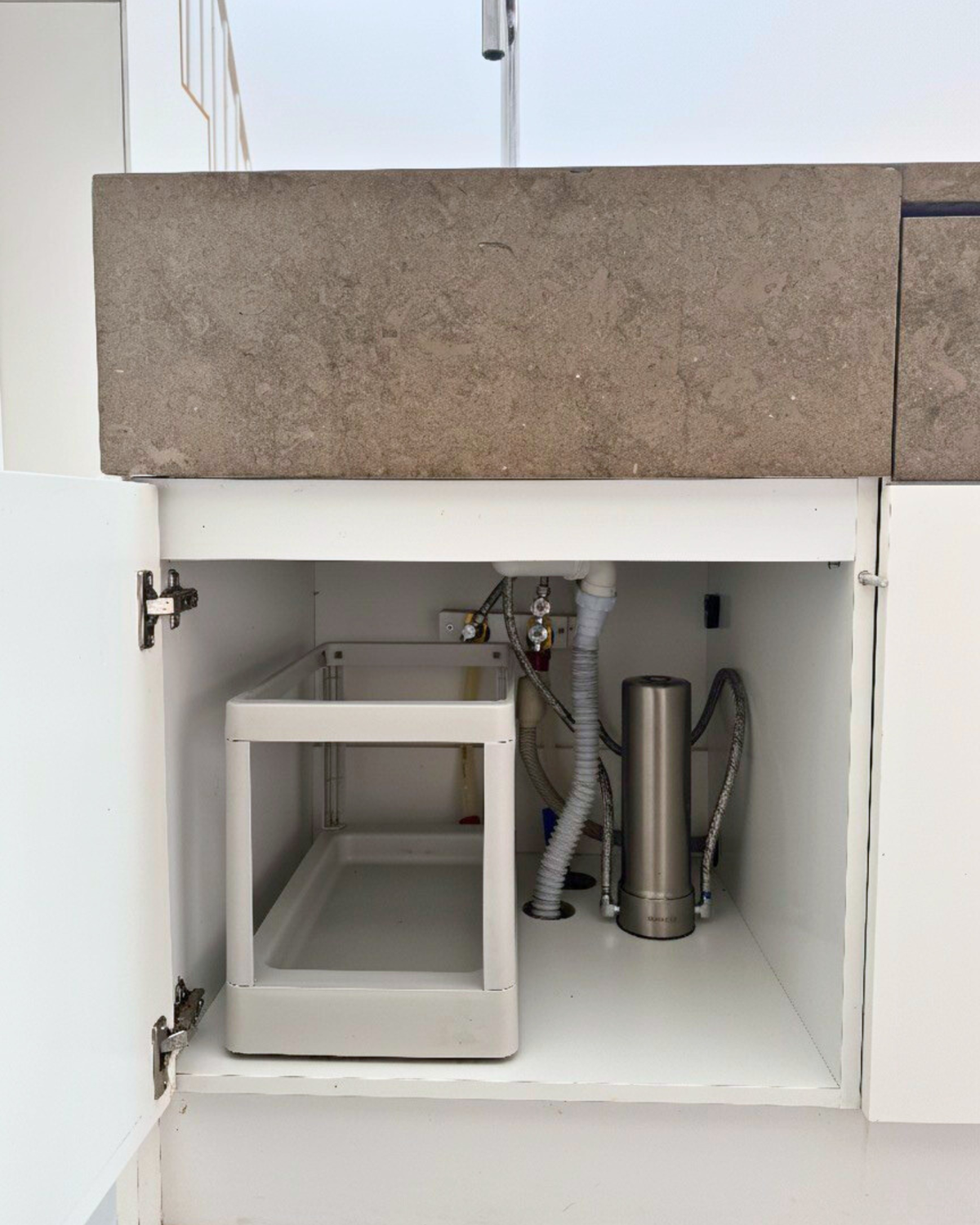

A stainless steel housing makes an under-sink filter sturdier and longer-lasting, but it doesn’t do the filtering. The cartridge inside does that. So the right question is: what does the housing protect, and what is in the cartridge?
Quick answers
- Housing vs cartridge: the housing holds the pressure and protects the cartridge. The cartridge does the filtering.
- Stainless steel: handles pressure and knocks well, doesn’t crack with age, and you keep it for years.
- Plastic: lighter and cheaper, but some housings are meant to be replaced after a few years.
- What to compare: what the cartridge is tested for, over how many litres, and what a year of cartridges costs.
What the housing actually does
Under your sink, the filter sits on the cold-water line at full mains pressure all day. The housing has to hold that pressure, survive pressure spikes when taps open and close, and take the odd knock from cleaning products and bins. Inside it sits the cartridge with the filter media.
Stainless steel vs plastic
| Stainless steel housing | Plastic housing | |
|---|---|---|
| Pressure and knocks | Very strong, doesn’t crack with age | Good when new, can become brittle over years |
| Lifespan | Many years; you replace only the cartridge | Some makers recommend replacing the housing every few years |
| Weight and price | Heavier, costs more up front | Light and cheaper |
| Looks | Clean metal cylinder | Usually white or blue plastic |
| Filtration | Depends on the cartridge | Depends on the cartridge |
What matters inside the cartridge
When you compare filters, look past the housing and ask three questions:
- What is it tested for, and to which standard? NSF/ANSI 42 covers chlorine, taste and odour.
- Over how many litres? A result at 500 litres says little about month eleven.
- What does it keep? Carbon filters keep calcium and magnesium; reverse osmosis removes them.
For the full checklist, see how to choose an under-sink water filter in Europe, and for what the standards mean, water filter certifications explained.
Fitting it in a European kitchen
Many European kitchens have little space under the sink, and many people rent. A slim housing that connects to the tap you already have, without drilling or a separate faucet, is often the deciding factor. See filters that work with your existing tap.
PJURE
The PJURE under-sink water filter has a stainless steel housing and one cartridge a year. Inside, in this order: a pre-filter, KDF® 55 copper-zinc media, a coconut-shell carbon block, a fine polypropylene membrane and a calcite and maifanite mineral stage. It is independently tested to NSF/ANSI 42: at least 97% chlorine reduction through the full 30,000 litres, keeps the calcium and magnesium in your water, and connects to your existing tap in about 10 minutes.
Frequently asked questions
Is a stainless steel water filter better than plastic?
The housing is sturdier and lasts longer. How well it filters depends on the cartridge, so compare test results too.
Do I have to replace the stainless steel housing?
No. You replace only the cartridge, usually once a year.
Does stainless steel affect the taste of the water?
No. Food-grade stainless steel is used in kitchens and breweries because it doesn’t change taste.
By Annette Holst, founder of PJURE · Updated 22 November 2026
