

Best PFAS Water Filter for European Homes: It Depends on Your Water (2026)
Compartilhe este artigo
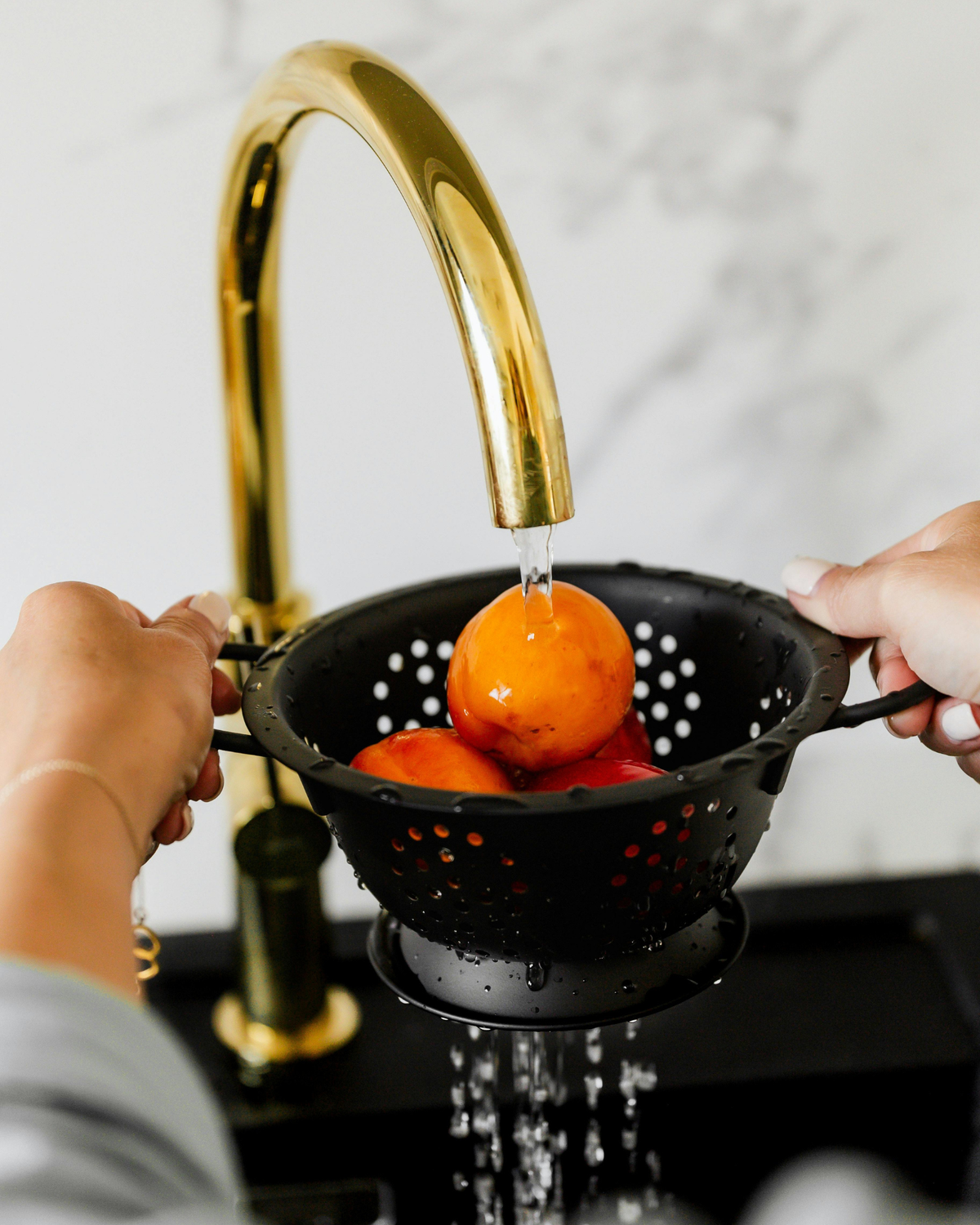

There is no single best PFAS filter; the right choice depends on your utility’s PFAS results. Where levels are far below the EU limit, a carbon filter is a sensible extra step that also fixes chlorine taste. Where levels are close to a limit, reverse osmosis gives the most consistent reduction.
Quick answers
- Check first: your utility’s PFAS results, against the EU limit of 100 ng/L for the sum of 20 PFAS.
- Far below the limit: no filter is needed for compliance; a carbon block is the material research looks at if you want an extra step.
- Near or above a limit: follow your utility’s advice; reverse osmosis is the most consistent at home.
- Private well: test it first.
Choose by situation
| Your situation | What makes sense | Why |
|---|---|---|
| Utility far below the EU limit, you dislike the taste | Activated carbon filter | Reduces chlorine taste; carbon is studied for PFAS; keeps minerals |
| Utility near the limit, or you want the strictest reference (Denmark’s 2 ng/L) | Reverse osmosis | Most consistent PFAS reduction in research; removes minerals |
| Utility above the limit | Follow official advice; RO at home | Your utility must act and inform you |
| Private well, unknown | Lab test first | Choose treatment based on results |
What research shows
In a study of filters used in real homes, activated-carbon point-of-use filters reduced PFAS by 73% on average, with large differences between products; reverse-osmosis and two-stage under-sink systems did better (Herkert et al., 2020). The US EPA lists granular activated carbon, ion exchange and reverse osmosis as effective treatments (US EPA).
To compare specific products, use the questions in our PFAS buyer’s guide and our guide to water filter certifications. For the limits country by country, see PFAS in drinking water: the 2026 EU rules, and for the practical steps, how to reduce PFAS in tap water.
Where PJURE fits: the materials we chose
The PJURE under-sink water filter is built for the first row of the table: tap water that meets the rules but tastes of chlorine. We didn’t build it around a PFAS promise. We built it around the materials research and their makers document, and we tell you exactly what each one is documented for:
| Material in PJURE | What it is documented for | Source |
|---|---|---|
| Coconut-shell activated carbon block | Chlorine taste and odour. Activated carbon is also the filter material research studies for PFAS at home, with results that vary between products. | Shown in research (Herkert et al., US EPA) |
| Genuine KDF® 55 copper-zinc media | Its maker documents over 99% free chlorine reduction and up to 99% of water-soluble metals such as lead, mercury and nickel, and the media is certified to NSF/ANSI 42. KDF is not a PFAS material. | Material data (KDF Fluid Treatment) |
| The complete PJURE filter | Independently tested to NSF/ANSI 42: at least 97% chlorine reduction through the full 30,000 litres. | Tested on PJURE (results) |
The calcium and magnesium stay in your water, so it doesn’t taste flat. If your utility’s PFAS results are close to a limit, reverse osmosis is the more consistent choice, and we’d rather tell you that than sell you the wrong filter.
Frequently asked questions
What is the best filter type for PFAS?
Reverse osmosis is usually the most consistent. Activated carbon also reduces PFAS in research, with more variation between products.
Does KDF 55 remove PFAS?
No. KDF® 55 is documented by its maker for chlorine and water-soluble metals. For PFAS, the material research looks at is activated carbon (and reverse osmosis membranes).
Do I need a PFAS filter in Europe?
Not for compliance, if your utility is below the limits. It’s a personal choice for an extra step at the tap.
Where can I see PFAS levels for my area?
On your utility’s website. For Portugal and Spain, see our PFAS results by area.
By Annette Holst, founder of PJURE · Updated 24 November 2026
