Everyone wants “clean water.” But let’s not forget the other half of the story: water needs minerals. They don’t just affect taste — they influence hydration, electrolyte balance, muscle and nerve function, and how water actually feels in your body.
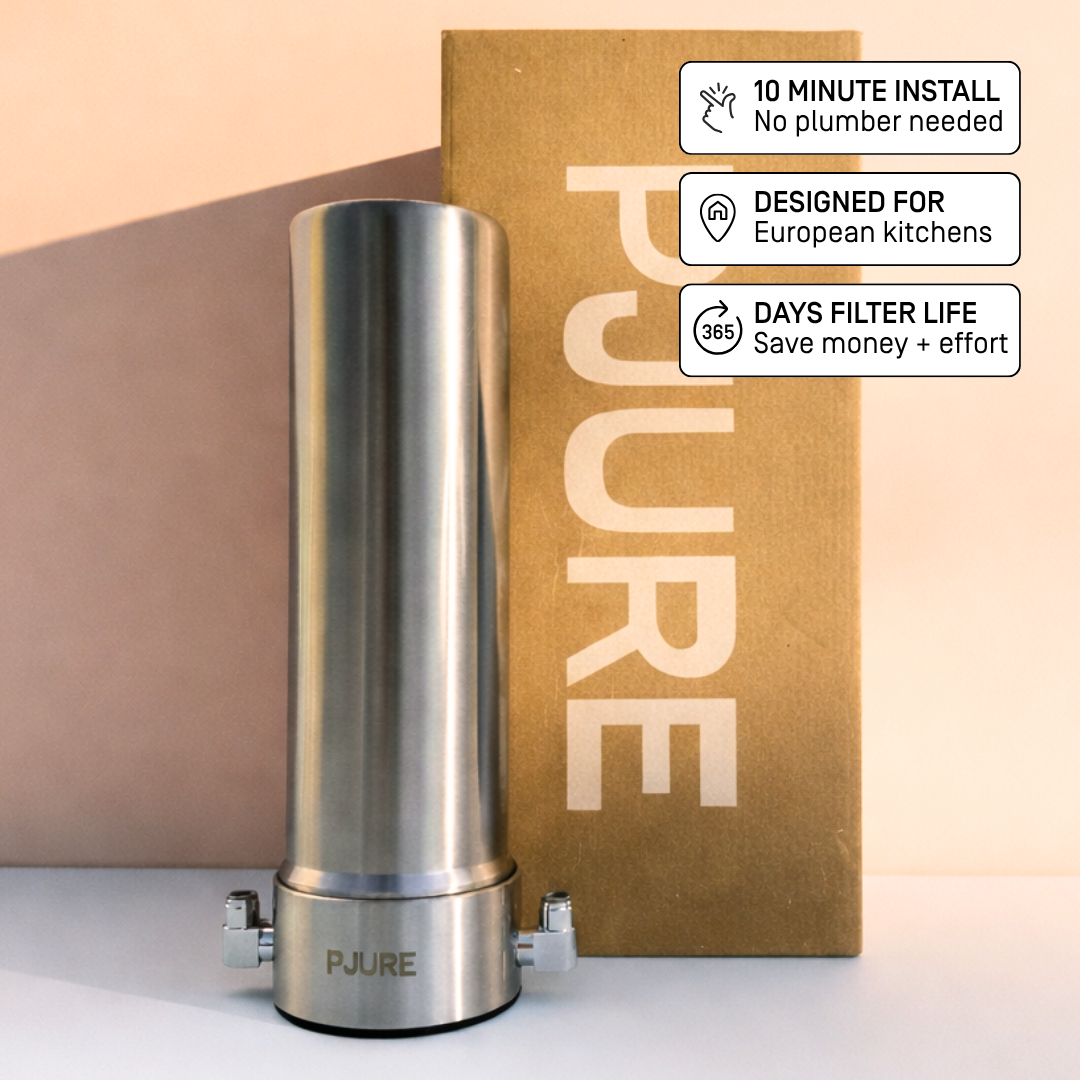
The PJURE under-sink water filter is built around exactly this balance — it removes contaminants while keeping the beneficial minerals in your water.
Yet many filtration systems remove those minerals entirely (hello, old-school RO units). This guide explains why minerals matter — and how to filter water without stripping out the good stuff.
Why Minerals Matter in Drinking Water
European tap water naturally contains minerals like calcium and magnesium, especially in regions with hard water. According to the World Health Organization (WHO), these minerals contribute to:
- proper muscle and nerve function
- electrolyte balance
- healthy metabolism
- better hydration efficiency
- taste and mouthfeel
WHO also notes that water low in minerals may be “less palatable” and potentially less hydrating.
Source: WHO — Nutrients in Drinking Water (2005).
Minerals in Water Are Highly Bioavailable
Unlike some food sources, minerals in drinking water are extremely easy for the body to absorb. WHO states that the “bioavailability of minerals in drinking water is typically high.”
Independent research supports this:
- Magnesium from mineral water is absorbed as well or better than from food (Sabatier et al., 2002)
- Calcium in hard water is highly bioavailable (Brink et al., 2008)
- Drinking-water minerals can meaningfully contribute to total daily intake (WHO, 2005)
In short: water minerals are not only beneficial — they are efficient.
What Happens When Filters Remove All Minerals?
Reverse Osmosis (RO) systems remove nearly everything. Great for desalination. Not great for everyday hydration.
According to WHO and the EU Drinking Water Directive (2020/2184):
- de-mineralized water may not support electrolyte balance as effectively
- it may have “flat taste” and low consumer acceptability
- it can be more corrosive to plumbing systems
WHO is clear: some minerals in water are desirable.
The Best Filters Keep Minerals — While Reducing Contaminants
A good mineral-friendly filtration system removes what you don’t want, but keeps what you do want. This is where activated carbon–based systems shine.
Activated carbon + KDF + PP membrane filters can reduce:
- PFAS (supported by EPA)
- chlorine
- microplastics
- VOC compounds
- taste and odor issues
- sediment from older pipes
…while allowing beneficial minerals to flow through naturally.
This is similar to how many European water utilities improve taste without altering mineral composition.
Why Europe Has Mineral-Rich Water
Europe’s geology gives each region its own “water identity”:
- Germany: very hard water — rich in calcium and magnesium
- Italy: mineral-rich spring sources
- France: limestone aquifers
- Spain/Portugal: varied mineral profiles depending on region
- Nordics: softer, lower-mineral water
Removing minerals removes the natural character of the water — and the hydration benefits.
Minerals and Hydration: What the Research Shows
Multiple studies confirm that minerals in drinking water support healthy hydration:
- Magnesium supports normal muscle, nerve and electrolyte function (WHO, 2005)
- Calcium from water is efficiently absorbed and contributes to daily intake (Brink et al.)
- Mineral-rich water improves hydration quality because electrolytes help regulate fluid balance (Sabatier et al.)
In other words: water with minerals doesn’t just taste better — it works better.
How to Choose a Mineral-Friendly Water Filter
Look for systems that:
- use activated carbon (for PFAS, chlorine, taste, VOCs)
- include KDF (copper + zinc for chlorine + metal support)
- include a PP membrane (captures sediment/rust)
- do not remove minerals
- use stainless steel housings for durability
This gives you clean, crisp, mineral-balanced water — exactly what most Europeans prefer.
Example system:
PJURE Stainless Steel Under Sink Filter
Minerals vs RO: The Real Difference
Reverse Osmosis:
- removes nearly all minerals
- flattens taste
- wastes water
- requires a tank or power in many systems
Mineral-retaining carbon systems:
- keep natural minerals
- improve taste
- reduce PFAS, chlorine, VOCs
- preserve hydration quality
This is why many Europeans now choose carbon-based systems instead of RO.
Conclusion: Minerals Matter — Keep Them
Clean water isn’t enough. Water should hydrate well, taste balanced and feel natural.
The best filtration systems:
- remove contaminants
- keep beneficial minerals
- improve taste
- support everyday hydration
Explore a mineral-friendly filtration system here:
mypjure.com/products/under-sink-water-filter
Want the full picture? See the 5 health benefits of mineral-rich water, or find out what you lose when a filter strips minerals out entirely.