Brita has been the go-to household filter in Europe for decades. Almost every student apartment, office kitchen and Airbnb has one. But water quality concerns have changed. And so have filtration technologies.
Many Europeans are now asking a new question:
Should I upgrade from a pitcher filter to a real under-sink filtration system?
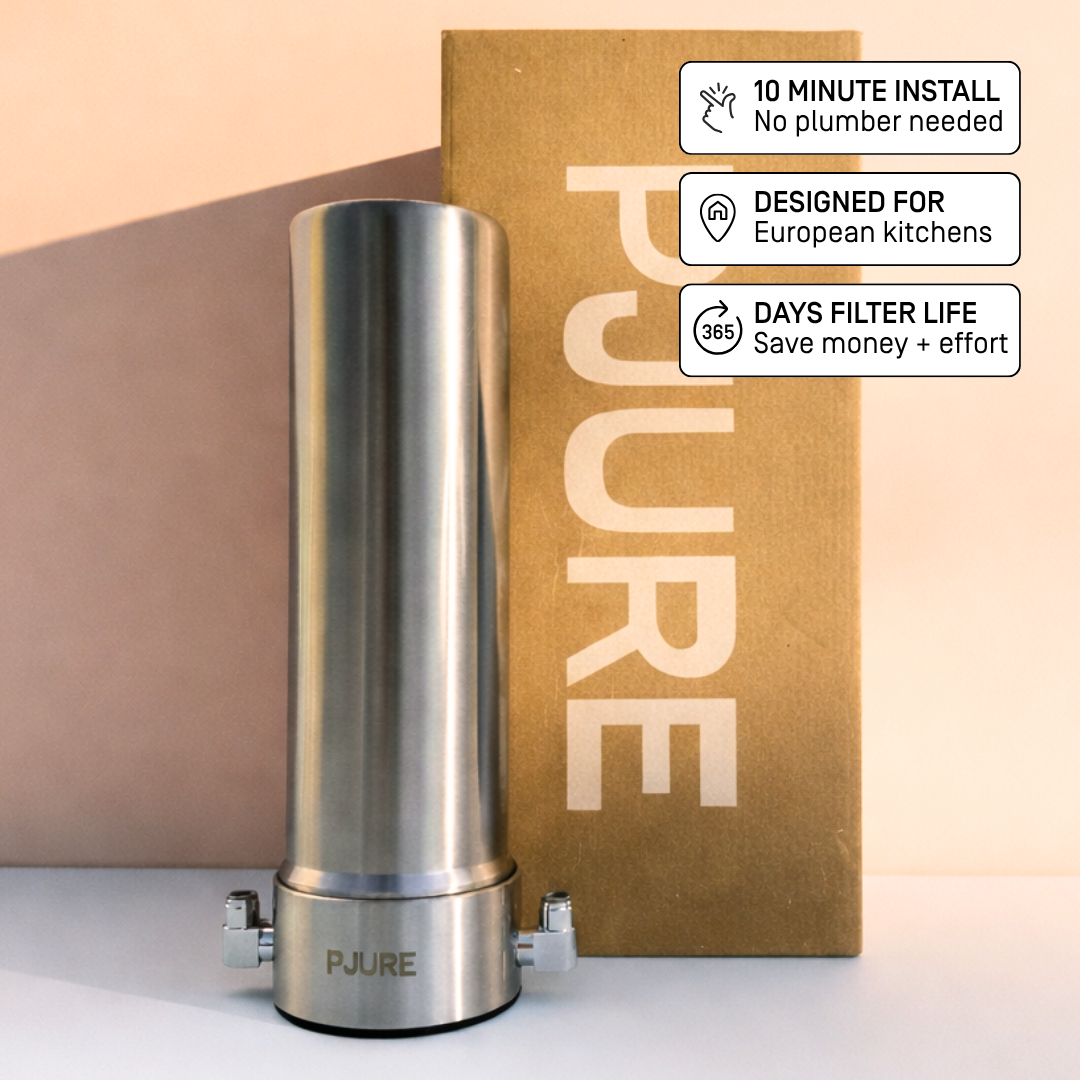
See the PJURE under-sink water filter specs and pricing here.
This guide compares PJURE vs Brita across taste, filtration performance, PFAS reduction, maintenance, sustainability and European water quality needs.
Quick Summary
If you want a simple answer:
- Brita = basic taste improvement
- PJURE = full filtration performance + mineral retention
Both serve different needs. One is a starter filter. The other is a long-term water upgrade.
1. Filtration Technology
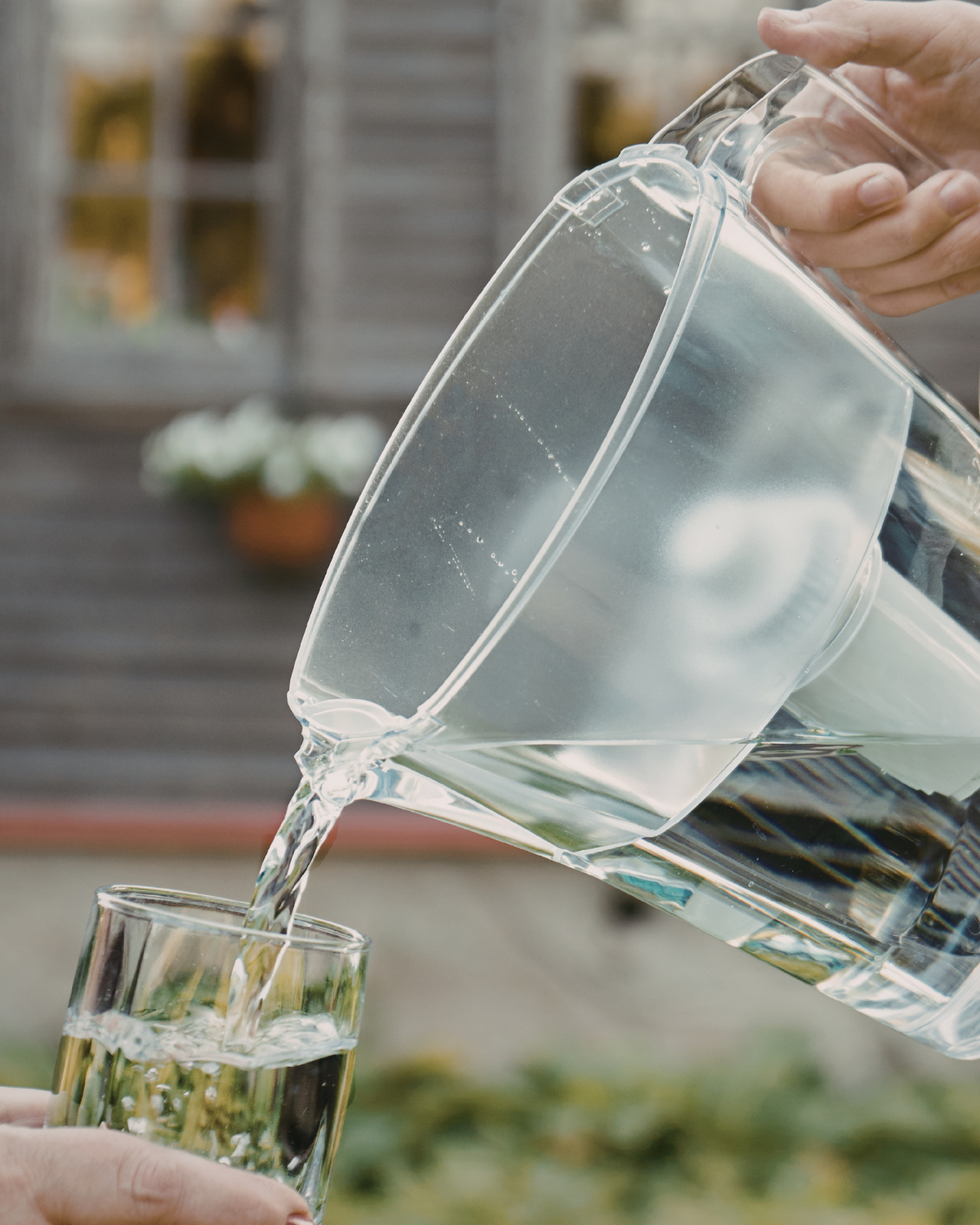
Brita (EU Pitcher Filters)
Brita uses a combination of:
- activated carbon granules
- ion-exchange resin
Effectiveness:
- reduces chlorine
- reduces some taste & odor compounds
- reduces limescale through ion-exchange
Limitations (according to EPA & peer-reviewed studies):
- not designed for PFAS reduction (U.S. EPA – PFAS overview)
- limited VOC and microplastic reduction (ACS Environmental Science & Technology study)
- short filter lifespan
PJURE (Under-Sink System)
PJURE uses a multi-stage filtration system including:
- Coconut Activated Carbon (high-density)
- KDF (copper + zin