

Reverse Osmosis vs Carbon Filter: Which Do You Need?
Comparte este artículo
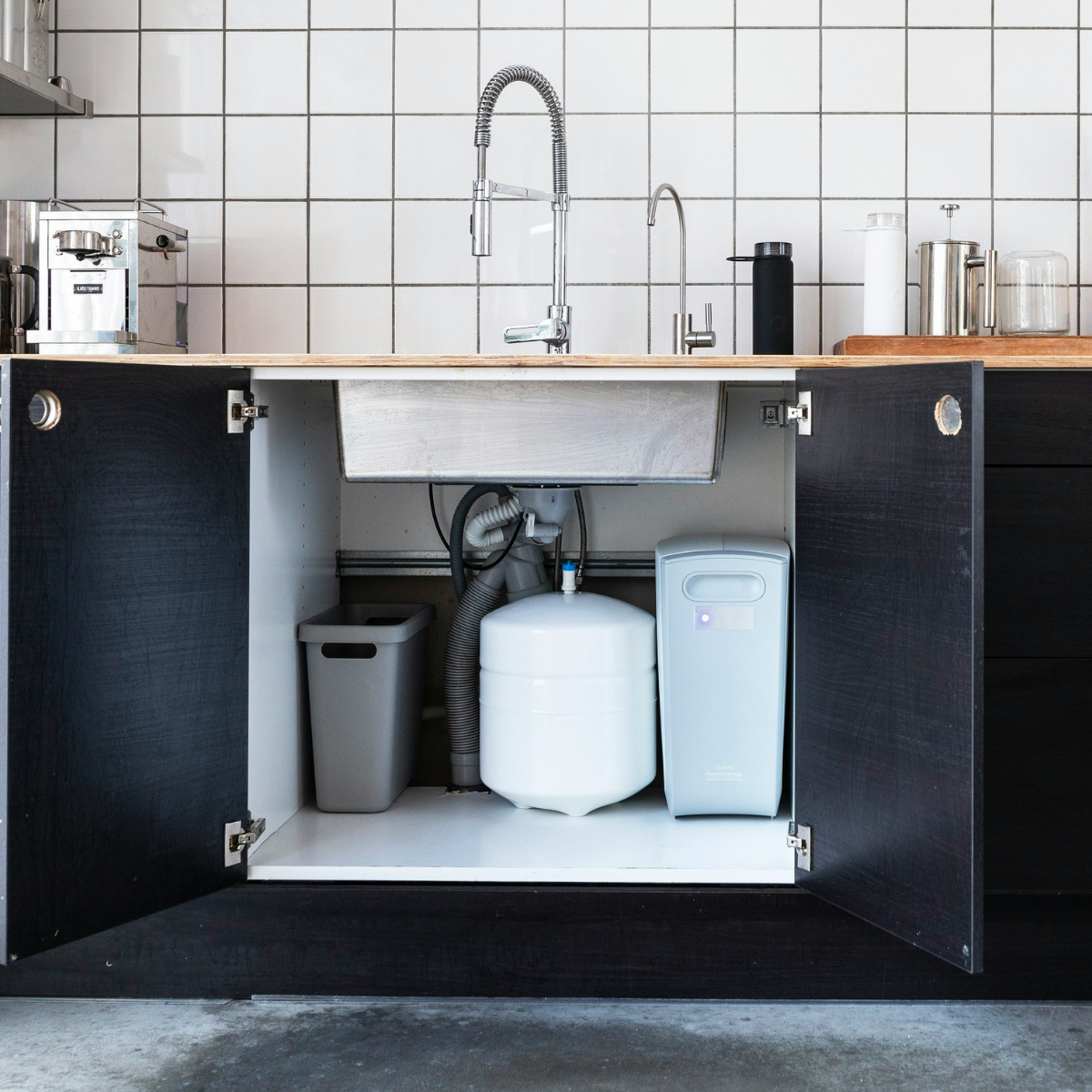

For tap water that already meets EU rules, most households don’t need reverse osmosis. A good carbon filter takes out the chlorine taste and keeps the calcium and magnesium. Reverse osmosis makes sense when your water has a specific problem that carbon can’t handle, such as high nitrate or salty well water.
Quick answers
- Reverse osmosis (RO): pushes water through a very fine membrane. Removes almost everything, including minerals.
- Carbon filter: adsorbs chlorine, taste and odour compounds and many organic substances. Keeps the minerals.
- Water use: household RO units send part of the water to the drain; a carbon filter doesn’t.
- Choose RO for a specific problem your utility or a lab test has shown. Choose carbon for better-tasting tap water.
How they compare
| Reverse osmosis | Carbon filter (under-sink) | |
|---|---|---|
| How it works | Membrane that lets water through and holds back dissolved substances | Carbon surface that binds chlorine and organic compounds |
| Minerals | Removed (calcium, magnesium) | Kept |
| Taste | Very neutral, often described as flat | Tap water without the chlorine note |
| Water to drain | Yes, often several litres per litre filtered (US EPA WaterSense) | None |
| Installation | Tank, drain connection, often a separate faucet | Inline on the cold-water hose, uses your tap |
| Electricity | Some models need a pump | None |
Why minerals matter for taste
Calcium and magnesium give water its body. The World Health Organization notes that water with very few minerals tends to taste flat and is less accepted by consumers (WHO, Calcium and Magnesium in Drinking-water). That’s why many RO systems add a remineralisation cartridge afterwards. More detail in why reverse osmosis removes minerals.
When reverse osmosis is the better choice
- Your utility or a lab has measured high nitrate, salt or another dissolved substance that carbon doesn’t address.
- You are on a private well with a known problem.
- You need very low-mineral water for a specific use.
For PFAS, research shows that both carbon and RO can reduce them, with RO usually more consistent. See PFAS in drinking water: the 2026 EU rules for the limits and what studies show.
When a carbon filter is enough
If your water is safe but tastes of chlorine, or you’re tired of carrying bottles, a carbon filter does the job without a tank, a drain line or a separate tap. It also fits better in small kitchens and rented flats.
PJURE
The PJURE under-sink water filter is a carbon-based system with KDF® 55 copper-zinc media and a mineral stage. It is independently tested to NSF/ANSI 42: at least 97% chlorine reduction through the full 30,000 litres, keeps the calcium and magnesium, sends no water to the drain and connects to your existing tap.
Frequently asked questions
Is reverse osmosis water healthier?
Not in itself. It is very low in minerals. Whether you need RO depends on what is in your water.
Does a carbon filter remove minerals?
No. Activated carbon keeps calcium and magnesium.
How much water does reverse osmosis waste?
It varies by model. Many household units send several litres to the drain for every litre of filtered water.
By Annette Holst, founder of PJURE · Updated 22 November 2026
