Francia es conocida por su buena infraestructura, sus estrictas regulaciones y, en general, por su agua potable de alta calidad. Sin embargo, "segura" no siempre significa "óptima". Y en los últimos años, cada vez más hogares franceses han empezado a preguntarse sobre el sabor, las tuberías viejas, los residuos químicos y los contaminantes emergentes.
Así que veamos la verdadera respuesta:
¿Es seguro beber agua del grifo en Francia?
Sí, en la mayoría de las zonas. Pero eso no significa que esté libre de sustancias que mucha gente prefiere reducir.
Cómo se regula el agua del grifo en Francia
El agua del grifo francesa está regulada por la Directiva de agua potable de la UE (UE 2020/2184), que establece límites estrictos para la seguridad microbiológica y los contaminantes químicos.
Según las autoridades sanitarias francesas, más del 95% de las muestras de agua del grifo cumplen las normas legales de seguridad.
Esto significa:
- No hay bacterias peligrosas en el grifo
- Niveles controlados de metales pesados
- Desinfección para prevenir el crecimiento microbiano
Desde un punto de vista regulatorio, el agua del grifo francés se considera segura.
¿Por qué en Francia todavía se filtra el agua del grifo?
Incluso cuando el agua cumple con los estándares legales, varios factores afectan lo que realmente sale del grifo.
1. Sabor y olor a cloro
El cloro se utiliza ampliamente en Francia para mantener el agua microbiológicamente segura durante el transporte.
Cumple bien su función. Pero también afecta el gusto y el olfato.
Mucha gente describe el agua del grifo francesa como:
- "duro"
- "departamento"
- "químico"
Esta es una de las razones más comunes por las que los hogares eligen la filtración.
2. Tuberías envejecidas en edificios antiguos
Aunque las plantas de tratamiento son modernas, muchos hogares franceses aún dependen de tuberías antiguas.
Especialmente en:
- apartamentos parisinos
- Edificios históricos
- Casas rurales
Las tuberías más antiguas pueden aportar trazas de metales, sedimentos o sabores desagradables que no se introducen en la propia planta de tratamiento.
¿Qué pasa con los PFAS en el agua del grifo?
Los PFAS (a menudo llamados “químicos permanentes”) son una preocupación creciente en toda Europa.
La Agencia Europea de Medio Ambiente confirma que se ha detectado contaminación por PFAS en fuentes de agua en varios países de la UE, incluida Francia.
Estas sustancias:
- Persistir en el medio ambiente
- No se eliminan completamente mediante el tratamiento de agua estándar
- Puede ingresar al agua potable desde fuentes industriales o ambientales.
Fuente: Agencia Europea de Medio Ambiente – Riesgos químicos emergentes en Europa
Si desea una explicación detallada de cómo se comportan los PFAS en el agua del grifo europea y qué métodos de filtración los reducen realmente, lo cubrimos aquí:
Cómo eliminar PFAS del agua del grifo en Europa
¿Es el agua embotellada una mejor opción?
Muchos hogares franceses aún dependen del agua embotellada. A menudo por su sabor. A veces por tranquilidad.
Pero el agua embotellada tiene sus desventajas:
- Residuos plásticos
- Mayor costo a largo plazo
- Exposición a microplásticos de las botellas
Para la mayoría de las personas, mejorar la calidad del agua del grifo es la solución más sostenible y práctica.
Las mejores opciones de filtración para hogares en Francia
Filtros de jarra
Los filtros de jarra pueden mejorar el sabor al reducir el cloro. Sin embargo, su rendimiento de filtración es limitado y requieren cambios frecuentes de cartucho.
Son más adecuados para un uso a corto plazo.
Filtros de agua debajo del fregadero
Los sistemas de filtración debajo del fregadero proporcionan una filtración continua directamente en el grifo.
En comparación con los lanzadores, ellos:
- Reducir el cloro de forma más eficaz
- Manejar mayores volúmenes de agua
- Duran significativamente más
Muchos sistemas modernos también son adecuados para inquilinos, con una instalación sencilla y sin modificaciones permanentes.
Si alquilas y quieres entender qué funciona realmente en un apartamento, esta guía te explica claramente tus opciones:
El mejor filtro de agua para inquilinos en Europa
¿La filtración elimina los minerales?
Esto depende completamente del método de filtración.
Algunos sistemas (como la ósmosis inversa o las resinas de intercambio iónico) eliminan el calcio y el magnesio junto con los contaminantes.
Otros se centran en eliminar sustancias no deseadas conservando los minerales naturales.
La Organización Mundial de la Salud señala que los minerales presentes en el agua potable son biodisponibles y contribuyen a la ingesta general.
Fuente: OMS – Nutrientes en el agua potable
Entonces, ¿es segura el agua del grifo en Francia?
Sí. El agua del grifo francés es legalmente segura y está estrictamente regulada.
Pero muchas personas todavía optan por filtrarlo para:
- Mejorar el sabor
- Reducir el cloro
- Abordar las preocupaciones sobre los PFAS y los contaminantes traza
- Evite el agua embotellada
La filtración no se trata de miedo. Se trata de preferencia, comodidad y hábitos a largo plazo.
Si desea agua limpia y de buen sabor directamente del grifo, un sistema de filtración debajo del fregadero es una de las mejoras más prácticas que puede realizar.
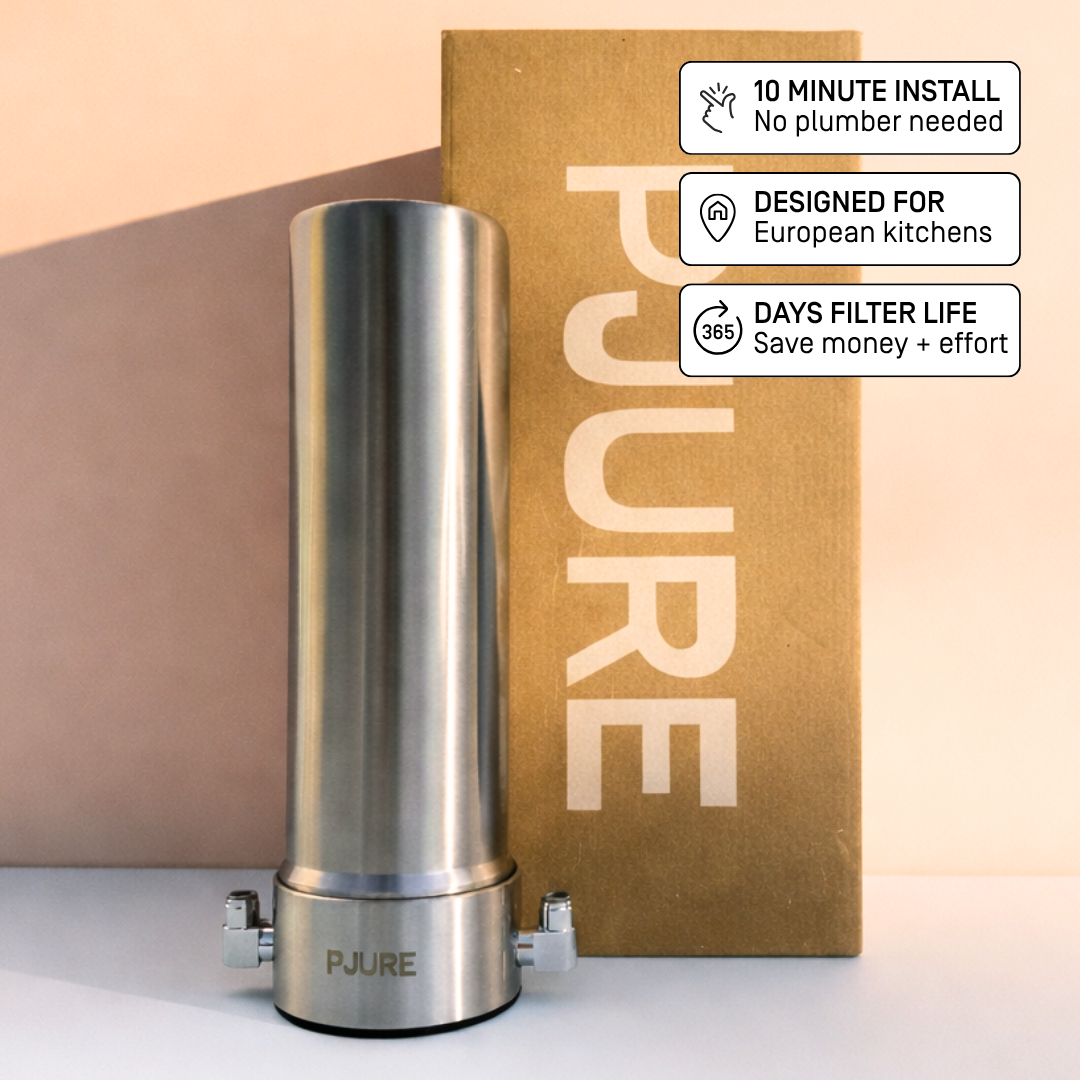
Filtro de agua de acero inoxidable PJURE para debajo del fregadero → Más información