Italia cuenta con una larga tradición de sistemas públicos de agua, manantiales naturales y fuentes de agua regionales. En la mayoría de las ciudades y pueblos, el agua del grifo es legalmente potable.
Pero, como en muchos países europeos, “seguro” no siempre significa consistente, de excelente sabor o libre de sustancias que la gente prefiere reducir.
Así que respondamos la verdadera pregunta:
¿Es seguro beber agua del grifo en Italia?
Sí, por ley. Pero la calidad, el sabor y la confianza varían considerablemente según la región.
Cómo se regula el agua del grifo en Italia
El agua del grifo italiana está regulada por la Directiva de agua potable de la UE (UE 2020/2184), que establece límites estrictos para la seguridad microbiológica y química.
Las autoridades locales del agua son responsables del seguimiento, el tratamiento y la presentación de informes.
Esto significa que el agua del grifo italiana se analiza para detectar:
- bacterias y patógenos
- metales pesados
- sustancias químicas reguladas
Desde un punto de vista legal y de salud pública, el agua del grifo en Italia se considera segura.
¿Por qué el agua del grifo tiene un sabor diferente en Italia?
La geografía de Italia juega un papel importante en la calidad del agua.
El agua del grifo varía según:
- fuentes de agua de montaña vs. subterráneas
- contenido mineral
- métodos de tratamiento regional
- plomería de edificios
En muchas zonas, el agua del grifo italiana es naturalmente dura, lo que significa que contiene niveles más altos de calcio y magnesio.
Según la Organización Mundial de la Salud, estos minerales se encuentran naturalmente en el agua potable y contribuyen al sabor y la dureza.
Cloro en el agua del grifo italiana
El cloro se utiliza comúnmente en Italia para mantener el agua microbiológicamente segura durante su distribución.
Si bien es eficaz, el cloro suele afectar:
- gusto
- oler
- Qué agradable es beber agua
Incluso cuando los niveles de cloro están muy por debajo de los límites legales, muchas personas encuentran el sabor desagradable.
Esta es una de las principales razones por las que los italianos recurren a la filtración de agua o al agua embotellada.
PFAS y contaminantes emergentes en Italia
Se han detectado PFAS (sustancias perfluoroalquiladas y polifluoroalquiladas) en fuentes de agua de varios países europeos, incluidas partes de Italia.
La Agencia Europea de Medio Ambiente confirma que los PFAS son sustancias químicas persistentes que no siempre se eliminan por completo mediante el tratamiento convencional del agua.
Agencia Europea de Medio Ambiente – Riesgos químicos emergentes en Europa
El seguimiento y la regulación están mejorando, pero:
- No todos los compuestos PFAS están regulados todavía
- La frecuencia de las pruebas varía según la región
- El cumplimiento legal no significa exposición cero
Si desea una explicación clara de cómo se comportan los PFAS en el agua del grifo europea y cómo la filtración ayuda a reducirlos, esta guía profundiza:
Cómo eliminar PFAS del agua del grifo en Europa
¿Es más segura el agua embotellada en Italia?
Italia es uno de los mayores consumidores de agua embotellada de Europa.
A menudo, se trata de gusto y hábito, no de seguridad.
Sin embargo, el agua embotellada tiene sus inconvenientes:
- residuos plásticos
- emisiones del transporte
- mayor costo a largo plazo
Para muchos hogares, mejorar la calidad del agua del grifo es una opción más sostenible y práctica.
Opciones de filtración de agua para hogares en Italia
Filtros de jarra
Los filtros de jarra pueden reducir el sabor a cloro, pero ofrecen una capacidad limitada y requieren cambios frecuentes de cartuchos.
Funcionan mejor como una solución a corto plazo o de nivel básico.
Filtros de agua debajo del fregadero
Los sistemas de filtración debajo del fregadero tratan el agua directamente en el grifo.
En comparación con los lanzadores, ellos:
- manejar volúmenes más grandes
- reducir el cloro de forma más eficaz
- requieren un mantenimiento menos frecuente
Muchos sistemas modernos también son adecuados para inquilinos y apartamentos.
Si alquila en Italia y quiere saber qué funciona realmente sin necesidad de perforar ni hacer cambios permanentes, esta guía le explica sus opciones:
El mejor filtro de agua para inquilinos en Europa
¿Los filtros de agua eliminan los minerales?
Esto depende de la tecnología de filtración.
Algunos sistemas eliminan minerales junto con contaminantes. Otros se centran en reducir las sustancias indeseables, conservando el calcio y el magnesio presentes de forma natural.
La Organización Mundial de la Salud señala que los minerales presentes en el agua potable contribuyen a la ingesta mineral general e influyen en el sabor.
Entonces, ¿es segura el agua del grifo en Italia?
Sí. El agua del grifo en Italia es legalmente segura y está estrictamente regulada.
Pero muchos hogares todavía optan por filtrarlo para:
- mejorar el sabor
- reducir el cloro
- Abordar las preocupaciones sobre los PFAS y los contaminantes traza
- evitar el agua embotellada
Filtrar no es cuestión de miedo. Es cuestión de preferencia, comodidad y calidad diaria.
Si desea agua limpia y de buen sabor directamente del grifo, un sistema de filtración debajo del fregadero es una solución práctica y a largo plazo.
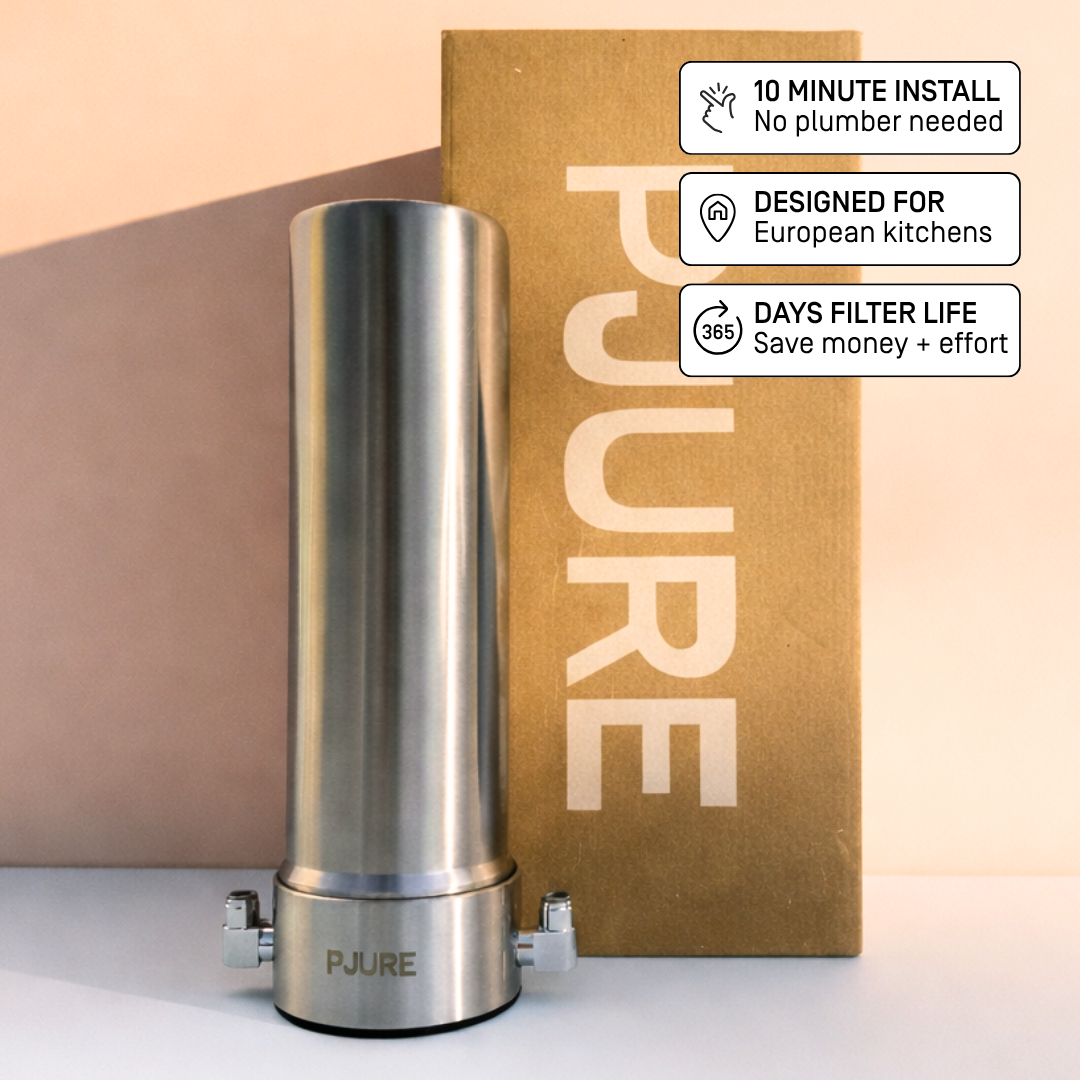
Filtro de agua de acero inoxidable PJURE para debajo del fregadero → Más información