

pH in Drinking Water: What the Number Means (and What It Doesn’t)
Compartilhe este artigo
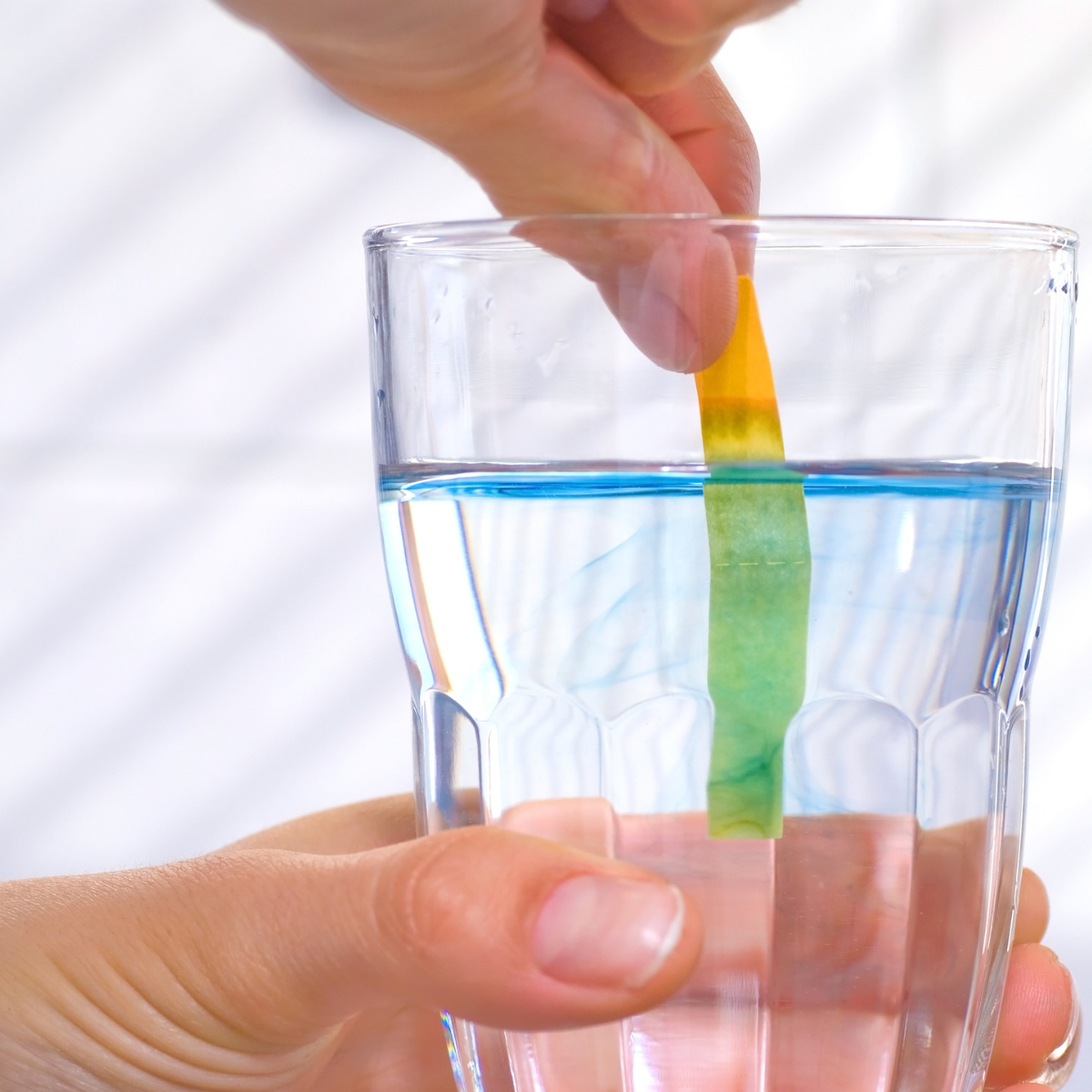

pH tells you how acidic or alkaline your water is, and EU tap water must normally sit between pH 6.5 and 9.5. Inside that range, pH says more about your pipes and the taste of your water than about the quality of it. A higher number is not a better one.
Quick answers
- Scale: 0 to 14. 7 is neutral, below 7 is acidic, above 7 is alkaline.
- EU range: 6.5 to 9.5, as an indicator parameter in the Drinking Water Directive (EU) 2020/2184.
- Why utilities care: water that is too acidic corrodes pipes; water that is too alkaline can leave deposits and taste soapy.
- Filters and pH: a carbon filter barely changes pH. Reverse osmosis usually lowers it, because it removes the minerals that buffer the water.
What pH actually measures
pH is a measure of hydrogen ions in the water. Each step on the scale is a factor of ten, so water at pH 6 is ten times more acidic than water at pH 7. Most tap water in Europe lands somewhere between 7 and 8.5, depending on the rock it flows through and how the utility treats it (USGS).
Why there is a range at all
The World Health Organization does not set a health-based value for pH. The range exists for practical reasons:
| pH | What happens |
|---|---|
| Below 6.5 | Water can corrode copper and lead pipes and pick up metal, which can give a metallic taste. |
| 6.5 to 8.5 | The range most utilities aim for. |
| Above 8.5 | Chlorine works less well as a disinfectant, deposits form more easily, and the water can taste bitter or soapy. |
pH and taste
Most people can’t taste small pH differences. What they notice are the things that travel with pH: the calcium and magnesium that give water body, the chlorine that gives it a swimming-pool note, and metal from old pipes in very soft, acidic water. That is why two waters with the same pH can taste completely different.
What about alkaline water?
Bottled and ionised “alkaline water” is often sold at pH 9 or higher. A high pH number on its own tells you little about the water. If you like the taste, that’s a fine reason to drink it. If you are buying it for the number, it’s worth knowing that the EU allows tap water up to pH 9.5 anyway.
How filters change pH
- Activated carbon: reduces chlorine and taste compounds and leaves pH close to where it was.
- Reverse osmosis: removes most minerals, so the water often ends up slightly acidic and tastes flat. More in why reverse osmosis removes minerals.
- Mineral stages: calcite can add a little calcium and nudge pH up slightly.
PJURE and pH
The PJURE under-sink water filter keeps the calcium and magnesium already in your water and has a small calcite and maifanite stage at the end. It is independently tested to NSF/ANSI 42: at least 97% chlorine reduction through the full 30,000 litres, which is the change most people actually taste. For more on minerals, read mineral-rich water and which filters keep the minerals.
Frequently asked questions
What pH should drinking water have?
In the EU, normally between 6.5 and 9.5. Most tap water sits between 7 and 8.5.
Is alkaline water better than tap water?
A higher pH is not a quality mark in itself. Choose the water you like the taste of.
Does a carbon filter change the pH of water?
Very little. Reverse osmosis lowers pH more, because it removes the minerals.
How can I check the pH of my tap water?
Your water utility publishes it, and our water check shows the published figures for Portugal and Spain. Test strips give a rough reading at home.
By Annette Holst, founder of PJURE · Updated 22 November 2026
