Water Knowledge – Clean Water & Filtration Insights

Mineral Water Filter: Why Minerals Matter (EU 2025 Guide)
Learn why minerals matter in drinking water, how they support hydration and electrolyte balance, and which filters remove contaminants without stripping minerals.
Learn more
PFAS Water Filter EU Buyer’s Guide (2025 Update)
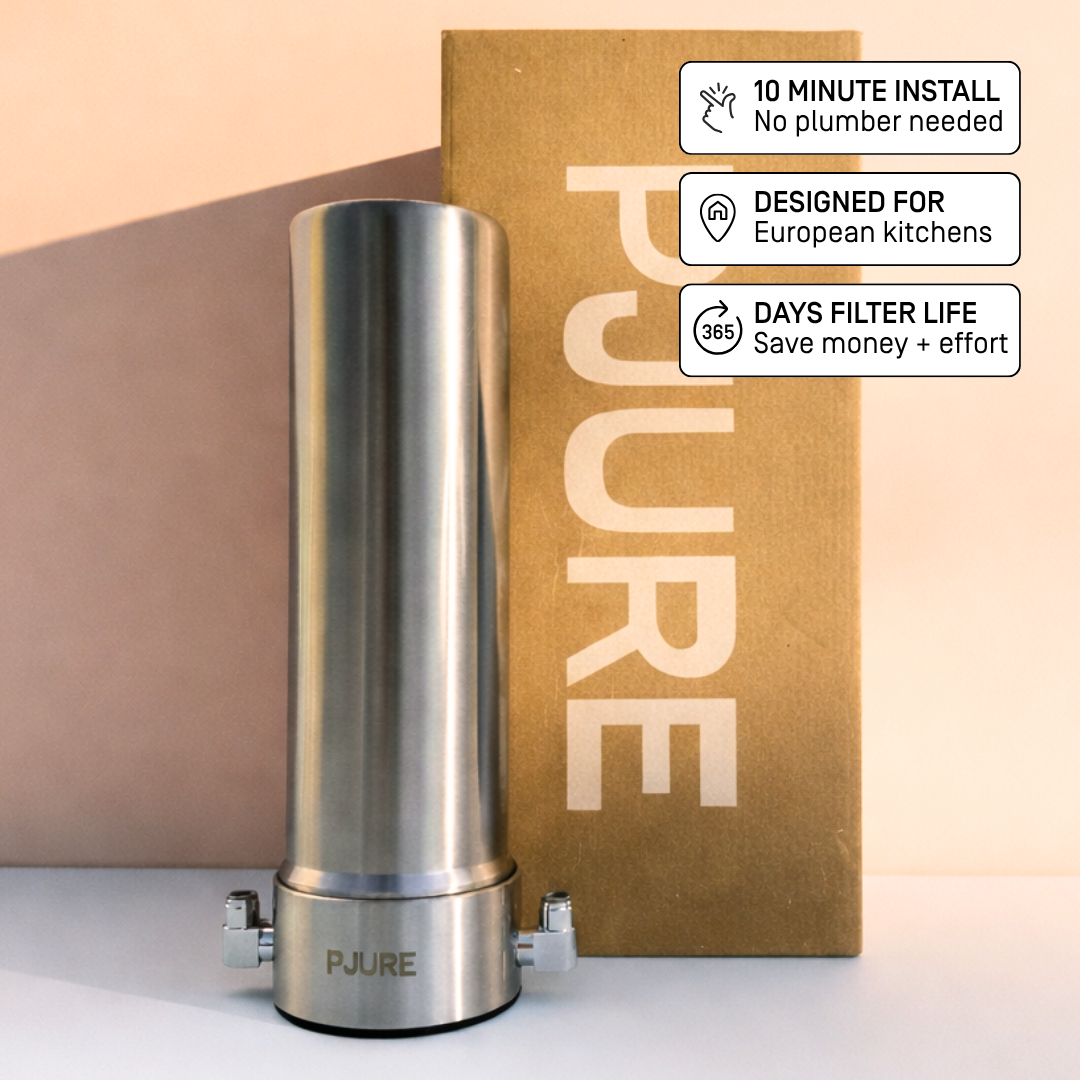
PFAS — the “forever chemicals” everyone in Europe keeps talking about. They’re in soil, rivers, rainwater and, in some regions, tap water. And now most people want the same answer: Which water filters actually reduce PFAS — and which ones don’t? This guide gives you the short, clear, evidence-based version. No fear. No panic. Just what works in European homes. What PFAS Are (and Why Europeans Care) PFAS (per- and polyfluoroalkyl substances) have been used for decades in non-stick coatings, waterproof fabrics, industrial production and food packaging. They don’t break down easily — which is why they end up in ground- and surface water. Across the EU, PFAS has been detected in drinking water sources according to the European Environment Agency (EEA, 2023). New limits are being implemented through the EU Drinking Water Directive (2020/2184), but many consumers prefer additional filtration at home. Which Water Filters Reduce PFAS? Let’s be extremely clear: The most effective consumer-grade method for reducing PFAS is high-quality activated carbon. Supported by: U.S. EPA PFAS Technical Fact Sheet ACS Environmental Science & Technology (peer-reviewed PFAS adsorption research) European Chemicals Agency (ECHA) Activated carbon works because PFAS molecules stick to its porous surface through adsorption. Denser carbon = stronger performance. The 3 Filtration Technologies That Work 1. Carbon Block (Most Effective) Carbon block filters provide the highest surface contact time and density, making them the top choice for PFAS reduction. 2. Granular Activated Carbon (GAC) Still effective, but lower density than carbon block. Ideal in multi-stage systems. 3. Reverse Osmosis (RO) RO can reduce PFAS, but comes with downsides: removes nearly all minerals (WHO notes this may affect taste and hydration — WHO Drinking Water Report) wastes water requires more installation space For most European households, carbon-based systems are the simpler, more sustainable option. Filters That Do Not Reduce PFAS Based on EPA and ECHA reviews, these filters are NOT designed for PFAS: basic Brita-style pitcher filters PP cotton sediment filters alkaline or mineral “boosters” magnetic or ionizing devices If it doesn’t include activated carbon → it won’t reduce PFAS. Simple as that. What Makes a Good PFAS Filter for European Homes? The ideal PFAS-reducing system should include: high-density activated carbon (GAC + carbon block) KDF (copper + zinc) for chlorine + heavy metal support PP membrane to catch sediment from older EU plumbing stainless steel housing for hygiene + durability no mineral removal — Europe’s water is naturally mineral-rich This gives strong PFAS reduction without stripping taste or wasting water. Example system:PJURE Stainless Steel Under Sink Filter PFAS in Europe: What the Data Shows PFAS has been found in drinking water sources across: Germany Belgium France The Netherlands Denmark Italy Spain Source: European Environment Agency. The EU is also reviewing a broad PFAS restriction under REACH, coordinated by ECHA. The Best PFAS Water Filter for EU Homes For most households, the best setup is: activated carbon (GAC + carbon block) KDF for chlorine + metal reduction PP membrane for sediment stainless steel housing no mineral removal This balances PFAS reduction, taste, cost, sustainability and everyday use. Explore the system:mypjure.com/products/under-sink-water-filter Conclusion: Choosing the Right PFAS Filter in Europe If you want to reduce PFAS at home, the science is clear: Choose a high-quality activated carbon system with dense carbon media. It’s effective, mineral-friendly, affordable to maintain and ideal for European water profiles. Learn more about PFAS reduction and European filtration options here:PJURE Stainless Steel Under Sink Filter
Learn more
How to Remove PFAS from Tap Water in Europe (2025 Guide)
A clear guide to how PFAS is removed from tap water in Europe — what works, what doesn’t, and how activated carbon filtration helps reduce PFAS at home.
Learn more
The Best Under Sink Water Filter in Germany (2025 Guide)
A practical guide to choosing the best under-sink water filter in Germany — including hard-water regions, chlorine taste, old pipes, minerals and what actually works for German homes.
Learn more
The Best Under Sink Water Filter in Spain (2025 Guide)
A complete guide to under-sink water filters in Spain. Taste, chlorine, minerals, hard water regions and the best filtration for Spanish homes in 2025.
Learn more
The Best Under Sink Water Filter in Portugal (2025 Guide)
If you live in Portugal, or just moved here, you've probably already learned two things: The tap water is safe. The tap water… doesn’t always taste great. Depending on the region, Portuguese tap water can swing between “surprisingly nice” and “why does this taste slightly like a public swimming pool?” (Hello, chlorine.) That’s exactly why under-sink water filters have quietly become the go-to solution for both locals and expats across Portugal. Why an Under-Sink Water Filter Works So Well in Portugal Portugal’s water network is modern and regulated — but taste, chlorine levels, and old building pipes vary a LOT by district. An under-sink filter solves this because it: reduces chlorine (the main taste culprit) improves taste and clarity reduces micro-impurities and pipe sediment keeps healthy minerals intact removes PFAS via activated carbon requires zero countertop space operates without electricity or wastewater It’s the “install once → enjoy forever” solution. Chlorine Levels in Portugal: The Real Reason Water Tastes Off The water is safe — and highly regulated by Agência Portuguesa do Ambiente (APA). But safety ≠ taste. In practice, chlorine levels differ significantly: Porto → generally higher chlorine Lisbon → varies by freguesia and building age Algarve → often mineral-heavy, taste varies So if your water sometimes tastes metallic, sandy, sharp or a bit like pool water — it’s normal. And fixable. Why Under-Sink Filters Beat Pitchers in Portugal Filter jugs are fine for student apartments. Not for grown-up kitchens. Under-sink water filters offer: higher performance faster flow better chlorine & taste reduction more effective PFAS reduction longer lifespan no plastic parts sitting in humid Portuguese kitchens Pitchers + Southern European humidity = not a great combo. What To Look For in a Water Filter in Portugal 1. Strong activated carbon This is what handles taste, chlorine, PFAS, microplastics, VOCs and organic compounds. 2. KDF (copper + zinc) Creates natural redox reactions that help reduce chlorine and certain heavy metals — and helps the filter stay stable over time. 3. A PP membrane stage Important in older Portuguese buildings where sediment or rust may appear from internal pipes. 4. Mineral-friendly filtration Portugal’s water is naturally mineral-rich — you want to keep it that way! 5. Stainless steel housing Because plastic housings age fast in heat and humidity. 6. Simple installation Portugal’s plumbing can be… creative. A plug-and-play solution helps. Is an Under-Sink Water Filter Worth It in Portugal? Short answer: Yes.Long answer: Absolutely yes. If you: buy bottled water regularly don’t like the taste of your tap water want a more sustainable option have kids care about coffee quality do we have to go on? …an under-sink filtration system is the most practical upgrade you can make. Who This Guide Is For Expats in Lisbon, Cascais, Porto, Algarve Families Renters and homeowners Anyone wanting better-tasting water Anyone tired of buying bottled water To sum it up: If you live in Portugal, this applies to you. PJURE’s System (10-Second Version) Designed for European water, including Portugal. Stainless steel housing Coconut activated carbon KDF (copper + zinc) PP membrane Mineral-friendly media No electricity No wastewater 5 min installation Clean, crisp, mineral-rich water Full breakdown of the tech:mypjure.com Conclusion: Portugal + Under-Sink Filter = Great Match Portugal has beautiful water sources — it just needs a little help at the last step. A good under-sink water filter makes your tap water taste the way it should: clean, crisp and fresh. Your morning lemon water will thank you.Your coffee will too.And your recycling bin will finally breathe. See the full system → mypjure.com
Learn more
Best Under Sink Water Filter (EU 2025 Guide)
A complete EU guide to the best under-sink water filters in 2025, covering PFAS removal, microplastics, mineral retention and the safest systems for European households.
Learn more
5 Science-Backed Reasons to Drink Mineral-Rich Water First Thing in the Morning
Discover why starting your day with mineral-rich, pH-balanced water improves energy, focus, and wellbeing. Backed by science — and filtered by PJURE.
Learn more
The Truth About pH in Drinking Water — Why Balance Matters More Than Numbers
pH isn’t about chasing high numbers — it’s about finding balance. Discover why a natural pH around 7.5 is ideal for taste, hydration, and mineral balance — and why “alkaline water” marketing often misses the point.
Learn more